Showing posts with label climbing. Show all posts

Monday, October 27, 2014

Pangarchula: Appearances can be deceptive

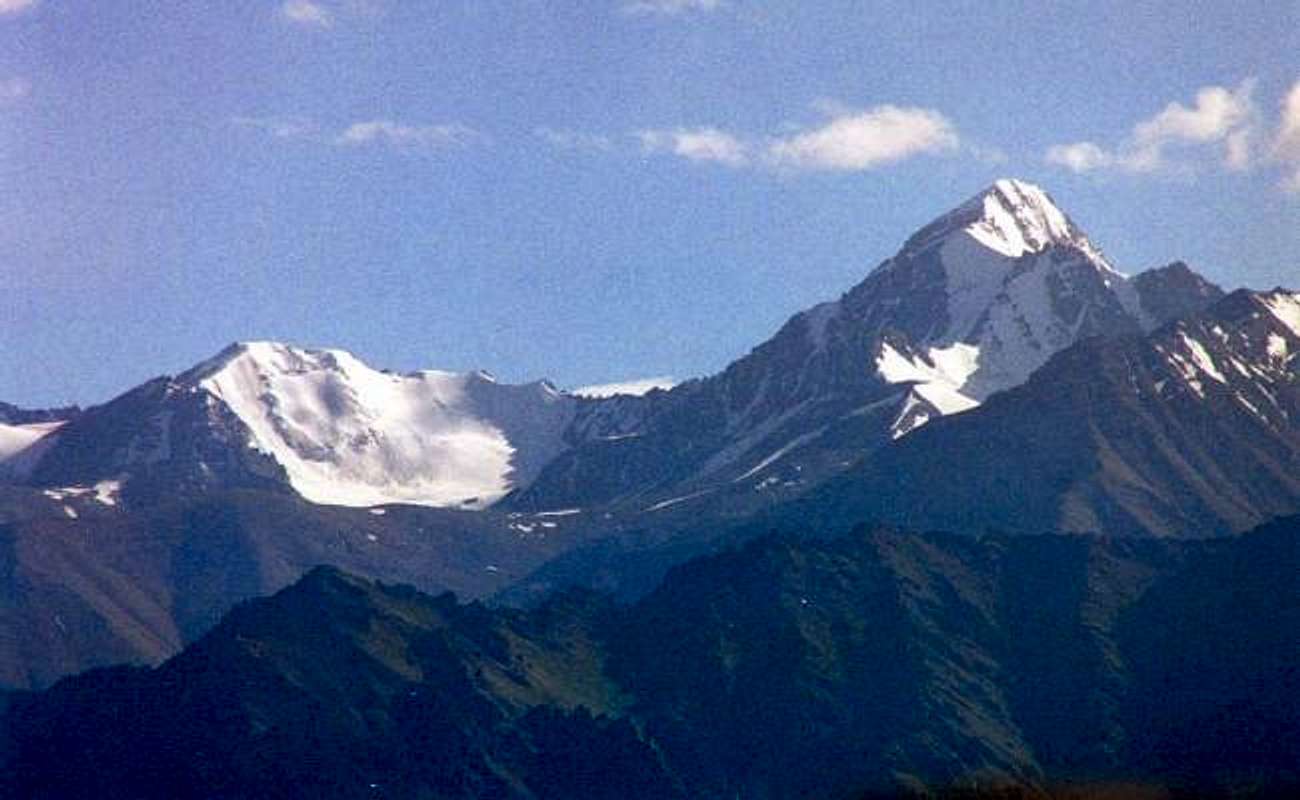
Some mountains, like Pangarchula, just beckon me: "Here I am. Just come on over," they seem to say. But what was surprising to me about Pangarchula was that it isn't a very tall mountain and looked mostly docile and non-threatening. It isn't a high mountain like Nanda Devi or Trishul or Donagiri that leave me with a mixture of awe and trepidation. It isn't like Changabang, a threatening mountain which, with its sharp and cold ridges, instilled a sense of fear in me. In that sense, Pangarchula did not issue a challenge. It just tempted me in an alluring and enticing manner.


The first time I saw Pangarchula was when I went on the Kuari Pass trek. We walked on a path that ran no more than 500 metres from the base of the mountain. And as our guide pointed out the peak to us, I wished we had included a Pangarchula peak climb as part of our trek itinerary. I was drawn then.

In October 2013, I saw Pangarchula again, this time from the top of Kala Khal. This viewing was from a fair distance away, and again, Pangarchula looked totally non-threatening and sedate. Once again, I had a yearning in me to climb the peak. I could not quite understand this.

It isn't even a tall peak. There are mixed reports on how tall Pangarchula actually is. Some record it at 4575m and some, like this one here, record it at 4900m. For the record, when we climbed Pangarchula peak, we recorded it at 4800m. Even then, 4800 metres is not much. On previous treks and expeditions, I have slept at heights greater than that for heaven's sake! So, I wasn't sure what Pangarchula's lure was.

But it certainly was there...

***

When my friend Ajit Bhaskar wrote to me earlier this year and asked if I would put together an itinerary and go on a Himalaya trek with him, Pangarchula was on my mind immediately even though I had already planned an expedition to the rather tough Kalindi Pass in June with another group. So I was initially a bit reluctant to go on another Himalayan pilgrimage this year. Nevertheless, the pull of Pangarchula meant that I rang Raju Martolia, the guide I normally go with on my Himalaya treks. I told him that I'd like to put together a group of mostly first-time trekkers for a 'simple trek' and asked if we could go to Pangarchula in October 2014. He answered, "Sir Pangarchula is not a trek, but an expedition. It might look easy, but it is actually quite tough especially if you want to do it in October when there isn't any snow. But since it is October, there is enough time to prepare. We can do it." He then advised me to include another trek prior to Pangarchula as a means of acclimatizing and preparing for the Pangarchula climb. After some research, I rang him back and asked if Roopkund-Pangarchula would go well together. He immediately agreed and said that it would work just fine. The Roopkund trek would take 6-7 days and would be perfect preparation (after a day's break in Joshimath) for the 3-4 day Pangarchula expedition. So the plan was set. As the itinerary and the dates were being finalized, I started pulling a group together.

By the end of February, we had a group. Ajit Bhaskar and I were soon joined by Chuck, Pun, Grond and Divya (nicknamed SoBoD on the trek) from Mumbai and Paddy, Arundati (referred to as Lam Lam -- long story), Sriram and Mahesh Krishnan from Melbourne.

We had seven months of lead-time for what was ahead and we needed to start preparing for the trek. We had enough time, although it seemed as though we spent much of that time chatting on the Whatsapp group we created for the trek. And as the departure date drew closer, it seemed as though we had spent much of the interim duration in toughening ourselves not against the rigours of the trek but against the unending onslaught of terrible jokes that would be cracked on the trek. But, looking on the bright side, I guess none of us gagged on the jokes we inflicted on each other on the trek. So perhaps the Whatsapp preparation was spot on!

Preparations commenced with a packing list, a requirements list, a shopping list, and a rigorous exercise routine. Our Whatsapp group was constantly abuzz with updates and questions but I was still quite worried. Most of the questions and discussions focussed on toilet arrangements, shower provisions and food menus than on aerobic conditioning, core strengthening and stretch routines!

My nervousness drove me to write a 12-page pre-trip document in which I tried to list down all the things we would need to know while on the trek. In it, I wrote about acute mountain sickness (AMS); how to recognize it, how to prevent it, how to deal with it. I wrote about sleep deprivation. I wrote about what we could look forward to on each day. I wrote about how people should take turns in moving to the front and the back of the group; the same set of people in the front and back can lead to a somewhat demotivated group. I guess I was a bit nervous about the trek and the group.

You see, I had put the group together. Everyone on this trek was known to me but several people on this didn't know each other at all. I was hopeful that the group would get together, build camaraderie quickly and even support each other on some of the tougher segments of the trek. The last thing we wanted on an already tricky trek-expedition was a fractured and non-functioning group.

The group had a nice age-distribution. We had one person in the mid-20s, four folk in the 30s, one in the 40s and three people in the 50s. The jury is still out on the exact age of Paddy, the tenth person in the group. While he maintained right through that he was no more than 48, conservative estimates and subsequent carbon dating experiments confirmed him at at least 65, if not more!

The group had a good fitness spread to it too. We had two people who were super-fit; they wre the enthu-cutlets of the group. Seven of us were constantly either drained by (or tired of or in awe of) the two enthu-cutlets. And then we had Paddy, who defied his age to demonstrate levels of fitness the rest of us could only dream of.

But the one facet in which we were all harmoniously together on was our ability to crack poor jokes. That was the binding force, Really. Well, that, and the mystery surrounding Paddy's age.

The group came together perfectly. It helped that Chuck ran a wonderful ice-breaking session the day we got together; the day we all met in Rishikesh. He set everyone what seemed like an extraordinarily difficult task: "Say a few words about yourself and a few sentences about what you dislike most about Mohan." However, some 10 hours later, we had to be dragged out of our chairs lest we missed the morning bus to Lohajang, from where our Roopkund trek would commence. If you feel a wave of sympathy coming my way, now is the time to say "awww". The following morning, when I texted my wife and said "The common factor in this group is me and they are all ganging up on me," she replied immediately, "I wish I was there too. I'd have joined in." Yes, you may say "awww" now at least.

By the end of the first day, there was much laughter, much mirth and much banter. I was feeling less nervous about the group dynamics and focussed my nervousness, instead, on the trek itself. 

Despite a few irritations, mainly to the eye of Chuck, Pun and Mahesh, we completed the Roopkund leg of the trek reasonably successfully. I am not going to write much about that leg, because I am sure some of the others will do so. Ajit Bhaskar has already started a serialization of what looks like an epic novel on the trek; here are part-1 and part-2

I will, instead, focus my attention on the Pangarchula expedition.

***

We had had a day's rest in Joshimath after the first leg of our trek, So we tended to our minor wounds and felt quite rested when we set off for Pangarchula. 

The name Pangarchula itself spells danger. Panga means a "a bladed African tool like a machete" in Kiswahili. These days, in Hindi, the word 'panga' means to "get actively stuck into a messy issue when it could be avoided." And 'chula' is a hot earthen oven in which rotis are made. So essentially, we were "getting into a hot oven, which we could easily avoid"?

I certainly didn't want to avoid it though. After an unsuccessful attempt at Kalindi Pass earlier on in the year (expedition had to be abandoned due to bad weather), I was quite determined to complete a peak climb when I had the opportunity to do so.

We had already lost one member of our group. Grond decided to stay back at Joshimath, and wasn't interested in making it even to Pangarchula base camp. He had had enough and wanted to nurse his aching ankles and knees. I don't blame him at all. The Roopkund trek sucked out all his energies and he probably had nothing more to give.

Forest walk on the way to Pangarchula base camp
So the remaining nine of us trudged up to Pangarchula base camp on a really hot day. 

We drove an hour from Joshimath to a place called Dhak and started our climb to base camp from there. 

We started the climb at approx 1600m and walked constantly uphill all day. The first half of it was through exposed terrain. We had no shelter from the scorching sun that beat down on us mercilessly and almost the entire day was continually and steadily uphill. 

We crossed several streams and several pretty villages too before we reached a thick forest which provided relief from the blistering afternoon sun. The rest of the walk was a bit more bearable because of this forest walk.

When we reached base camp, we had gained nearly 1600m that day and all of us were thoroughly exhausted. 

View of Neelkant from Pangarchula Base Camp
The camp itself was quite pretty. We could see several beautiful mountains all around us (Hathi-Ghoda, Burmal, Neelkant, Donagiri, Changabang and Chaukhamba, to name a few). And the edge of the forest wasn't too far away from the camp. This was useful because we collected logs for a bonfire on both nights we spent at base camp. 

The views of these mountains reminded me of what the famous explorer Eric Shipton once said, “A vision of such beauty is worth a world of striving.” We had worked really hard to get to the base camp and the sights we saw made that effort worthwhile. As a corollary, if visions of such beauty were easily available and accessible, perhaps we would not appreciate it and treasure it as much. All around us, all we could see was layer upon mysterious layer of snow-capped majesty. That vision itself was enough to drive away the aches and pains. 

But all wasn't well with the group. While some of us walked around Pangarchula base camp, busily and chirpily preparing for our peak attempt the following morning, two members in our group were quiet, apprehensive and somewhat down in spirits. I wasn't sure what it was but did not have the energy to ask. I was perhaps too self-absorbed to immerse myself in it. I had my own set of problems to deal with. 

And my problem was that I was becoming obsessed with 'peak bagging' Pangarchula; a feeling I have never had in any of the treks/climbs I have been on. I have only worried about doing the basic things right and have never been concerned with the outcome (climbing to the top). My principle has always been that if I did the basics right, the outcomes take care of themselves. But here, I was obsessed with thought of being on the Pangarchula peak. I worked on limiting and then, erasing that obsession.

We started our Pangarchula peak attempt at 5am the following morning. We were woken up at 4am and after a light breakfast and tea, we were off even before day break.

Our guide, Raju, had informed us in our post-dinner briefing the previous night that the ascent would be tough but quite doable. It would be tough mostly because of the boulders we had to walk on for much of the climb. And unlike the Roopkund trek, the path to the top wouldn't be clearly marked out -- a key difference between a trek and an expedition. But he assured us that he would take us along the most accessible and sensible path. He also said that we would reach the peak by 10am, after a continuous 5-hour climb.

What he didn't tell us was that this was only the second time he had attempted the Pangarchula peak when it wasn't covered in snow! He had underestimated how long it would take us... Underestimated it quite severely! At 10am, the group still had a climb of nearly 700m to get to the peak.

The Pangarchula ascent is basically entirely on moraine, which is basically the debris that is created by glacial melt. The size of the debris varies from silt to large (either well rounded or craggy) boulders of varying sizes. As glaciers melt and advance they create debris, either carved off the valley floor as the melt descends or that which gets scooped off the valley's walls. The debris may either be alongside the glacier or on top of it. 

The Pangarchula debris was all on top of it and in the form of large, craggy, uneven boulders. Most of these boulders were steady, but some were loose and unstable. So leg strength and core stability become quite important as you trudge up.
The climb to Pangarchula peak

Ajit Bhaskar took a pic of the Pangarchula moraine up close as we commenced the second of four moraine segments. Now imagine this sort of a terrain (as seen in the pic) over an approx 800m gain; some of it covered in sleet or fresh snow. Then you get a sense of the difficulty. Oh! And we only had our trekking boots; no crampons and no ropes.

On my previous trek/expedition to Kalindi in June this year, we encountered moraine that was either silt or well-rounded loose boulders. In that expedition, we walked, climbed, slid, fell, crashed and stumbled across and on top of Gangotri, Chaturangi, Tapovan, Sweta glaciers. 

That was tough too. But despite that experience under my belt, I felt that the moraine I encountered on Pangarchula was quite hard.

The Pangarchula moraine climb is divided into four somewhat distinct sections. The first is mostly all rock and, although seemingly unending, is somewhat easy to climb. Two members of our group -- Lam Lam and Sriram -- decided they had had enough at the end of that segment. They just sat down at a point and said they had no desire or ability to go any further. Nine of us had set out from camp along with three guides. Now, seven of us kept climbing and had three guides to help and assist us. I did feel a tinge of sadness that Lam Lam and Sriram stayed back, but up in the mountains, everyone knows their own limits and fends for themselves. They knew what worked best for them and decided that they had had enough. The fact that Sriram and Lam Lam had made it as far as they had already made them heroes. They'd gone further than many others would have.

Sometimes, at altitudes greater than 4000m, every step you take can represent an internal struggle. Headaches, cramps, fatigue, nausea, breathing difficulties and oxygen scarcity have a way of limiting resolve. It is quite likely that each one of us contemplated the ‘Really! Why am I doing this?’ question that day. I know I did. Often, you have the answers and when you don't, you just want to give up and collapse. 

The second stretch of moraine on Pangarchula is an incredibly steep climb. You go up a steep face (without ropes) on mostly solid rocks and get to a reasonably flat stretch with clumps of grass cover. While the grass was better to walk on -- because it provided better foot holds -- it was also a bit slippery because of recent snow fall. Some of these rock surfaces were slippery too, because of sleet formation. So we had to be careful as we hauled ourselves up this slope. 

This is segment in which I was beginning to lose my cool a little bit. Perhaps anxious on account of the time we were consuming on the approach -- we still had some 700m of climbing to do and the time was already 10am -- Raju, our guide, was charging ahead at the rate of knots. The fact that the incredibly fit Ajit Bhaskar was keeping pace with him meant that Raju pressed on at an even faster pace. They were feeding each other in a self-fulfilling loop that seemed to destroy the rest of the group. By then, there was no clearly marked out path. We had to make our own way to the top and had to navigate slippery, ragged boulders along the way. The group was getting separated quite a bit and the growing distance between the lead group and the rest wasn't doing anyone's morale any good. So I requested Ajit to slow things down and not match Raju step for step. We needed as many of us to stick together as possible if we had any chance of making it to the top. This worked a bit. The pace reduced, and we were less separated as a group.  

Sadly, at the top of that second stretch, Chuck and Paddy decided that they had had enough and decided that they would stay back too. I looked back to see if I could encourage them to continue. I could be wrong and I don't remember clearly, but I believe I shouted a word or two of encouragement. But that didn't work. Firstly, we were too far ahead for any words to have had any meaningful impact. Second, I took one look at Paddy's sagging shoulders and I knew immediately that he was spent. One of our guides stayed back with them and took them back to where Lam Lam and Sriram were. 

Now, five of us (Ajit, Mahesh, SoBoD, Pun and I) remained and started what I thought was the third moraine segment. We pressed on with two guides. At this point, Raju, Ajit, Mahesh, SoBoD, and I had moved ahead a fair bit; Pun and Kalam, the other guide were a bit further behind. 

This was getting tougher by the minute. This segment was marked by thin ledges. The presence of recent snow and sleet on some of the rock ledges made it quite dangerous too. There was no relenting the climb though; the more we climbed, the more, it seemed, we had to climb. I kept looking back for Pun, but she seemed to have slipped further and further behind. After a while, we lost sight of her completely. But I was confident she would be ok because she was with Kalam, an excellent guide. It was only much later that I learned that she too had had enough and returned to join the others, along with Kalam. So essentially, it was down to the four of us and Raju. We had no choice. All of us now had to make it to the top.

I wish I'd walked with Pun. I may have dragged her along with me too. I can't say for sure but I just wish I'd stayed closer to her. Still, the fact that Pun and Chuck made it as far as they did made them champions in my eyes. They had to miss much of the Roopkund trek when Chuck contracted conjunctivitis. Pun caught the bug too. They hadn't still recovered from it. So the fact that they even attempted Pangarchula -- forget getting as far up as they did -- made them heroes already.

I was determined that I would not have a Stok Kangri redux happen to me. On that particular expedition, ten of us had set out with four guides. With 600m of climb to go to the peak, we were reduced to four climbers and Raju (the same situation I found myself in on this Pangarchula trek). With 250m to go to the Stok Kangri peak, two members from the group just collapsed with exhaustion. I immediately decided to abandon my own peak attempt and decided to head back with those two. 

I wasn't going to allow that to happen to any of us on this day. So when Mahesh said at one point that he was exhausted and did not have the energy to continue, I pulled out all my energy tablets and stopped short of stuffing it all into his mouth! I was determined to see all of the remaining four of us at the peak and -- although Ajit and SoBoD certainly didn't need any help from me -- would have been happy to drag people to the top if necessary. 

I was particularly keen to see Mahesh reach the top. He had conjunctivitis too... In both eyes! And instead of giving up, he braved the elements and tough terrain to attempt it. We had a true champion in our midst and if anyone had to reach the top, it was this guy!

The time was 12.15pm when we started the fourth moraine segment of the climb. This was incredibly steep and was filled with large boulders with a reasonable amount of snow cover. We were already behind by the best part of two hours and still had at least another hour to go to the peak. We also hadn't had anything to eat since breakfast. I had exhausted all my supplies of energy gels, almonds, figs and energy tablets. I was running purely on adrenaline and from their faces, SoBoD and Mahesh looked spent too. Ajit, meanwhile, looked set to run a marathon and Raju continued to radiate energy and fitness! We needed one last determined push to the top. Miraculously, as if on cue, we started egging each other on in that last hour. We had no energy to shout out encouragement to each other (well, apart from Ajit that is, who was now looking set for a Gobi desert crossing, if needed -- and, given his penchant for cooking, I am not talking aloo gobi here). So Mahesh, SoBoD and I whispered encouragement to each other, counted steps and won small victories. We took it in 40-step segments and didn't look too far ahead or up. Every 40 steps, we would stop, gather breath and make the next set of 40 steps. Bit by bit, inch-by-inch, we clawed our way to the top. I just refused to look up at the peak. I knew it was nearing but was only willing to focus on the next 40 steps. Visibility was very poor as clouds had descended on the peak; we could barely see 5m ahead of us.

Selfie at Pangarchula peak...
At 13:15, nearly 3 hours later than planned, Raju had reached the top. Of course, he'd have reached the top much earlier had he been on his own. Two minutes after that, at 13:17, Ajit our 'mountain goat' had also reached the top. He too had been slowed down by the rest of us. His screeches echoed around us as we made the last few metres up to the top. I knew that there wasn't far to go now and afforded a look up to the peak. Ajit kept shouting words of encouragement. And at 13:20, Mahesh, SoBoD and I walked up to the Pangarchula peak and celebrated it with hugs and high-fives. 

And as any self-respecting climber does, we also took a selfie or two (see above).

I stood a few metres short of the 'absolute' peak though. Many years ago, in response to a question I asked Raju about how many peaks he had conquered, he replied (in Hindi): "We garhwali folk never 'conquer' mountains. We just seek permission of the mountain Goddess to climb the mountain. If we allow ourselves to think we have conquered the mountain, our Goddess will knock you down to size on the way down. That's why we always place our feet and our banner/flag a few metres short of the absolute peak." I kept that in mind and stood a metre or two off the absolute peak -- an area that was roughly 2m wide and 5m in length.

After spending no more than 10 minutes at the peak, we commenced the rapid descent to base camp. We saw clouds gathering around us all the time and visibility was diminishing with every passing minute. We didn't want the climb down to be any more treacherous than it already was. While the climb had taken us nearly 8 hours, we were down in at base camp in less than half the time. The climb down was as dangerous as the climb up was difficult; we slipped many times on the ice and snow. Even the seemingly invincible Raju slipped a few times on the way down. But we didn't seem to mind the falls and scrapes too much since our return journey was fueled by a mixture of happiness, relief and a sense of achievement.

And on the way down, I quietly started making plans, as one does, for the next challenge...

-- Mohan (@mohank)

Thursday, January 02, 2014

The mountains are calling and I must go...


This article was first published in DNA Online on 30 December 2013.

In 1873, John Muir, the famous Scots-born American explorer, botanist, naturalist and author, wrote a letter to his sister, Sarah Muir Galloway, just after returning from his longest and hardest trip to the mountains. He had been away for five weeks, exploring the mountains and glaciers around the Yosemite Valley, and talks about his next trip to Kings River and Lake Tahoe. 

He signs off in a display of deep yearning: “The mountains are calling and I must go...”

Mountains had everything Muir wanted: solace, wildernesses, challenges and the ability to understand nature. Even today, they mean different things to different people. For some, they represent the ability to escape from the mundane, for others they are a pilgrimage. 

Mountains, to me, represent immense beauty, resilience and strength. For a few days a year, they also allow me to exist in an environment where I am not a slave to time. Time is instead a great expanse in which I can walk, talk, climb, read, sleep, cook, gather wood for a fire, sing or listen to music. My sense of time undergoes a significant alteration when I am in the mountains. A day’s trek of eight hours may often seem like an eternity. On other days, I may have walked for 10 hours straight but felt as if I’ve been walking for barely two.  The Himalayas are an escape from my time-bound and transactional life, and I embrace this escape every year.

On my first trip to the Garhwal Himalayas, I struggled a bit and thought it might be my last trek. But I underestimated the lure of the mountains. Ruskin Bond writes in his poem Living with Mountains in A Bond with the Mountains: “Once you have lived with mountains, under the benedictory pines and deodars, near stars and a brighter moon... You will return, you will come back to touch the trees and grass, and climb once more the windswept mountain pass.”

Why: The motivations

There are times on every expedition when I ask myself, “Why am I doing this? Why am I here?” On my recent trek to Changabang through the Bagini Glacier, there was a particularly steep climb up to Kala Khal, the last pass we crossed on our 12-day trip. As I trudged up this tough mountain, I asked myself that same question.

It is easy to glibly repeat what George Mallory said after climbing the Everest, “Because it is there”. But this answer somehow misses the point, for Antarctica is also ‘there’, and I don’t feel the overwhelming compulsion to visit annually. The Himalayas, on the other hand, draw me every year. 

On a trek, especially at altitudes above 4000m, every day can be a struggle. Many times, my friends and I are exhausted and somewhat irritable. On most days above 4000m, we suffer headaches (and sometimes, nausea too) from the high altitudes and oxygen scarcity. Some climbers and trekkers have to take Diamox, a pill to combat acute mountain sickness (AMS). I have not had to use it yet, but I am acutely sleep deprived at heights over 3500m. On most trek nights, I am on a two-hour sleep cycle, with an hour in between to toss and turn, listen to music and somehow will myself to sleep again. (I carry a solar charger to recharge my iPod and our camera batteries.) There is no water to wash or shower with on a regular basis. A bowl of hot water is all you get every morning. 

Here are a few specific 

Yet, the lure of the Himalayas is immense. The views, the pure air, the quiet, the solitude, the ability to introspect, and the ability to exist in a different sense of time and space have made a trek to the Himalayas an annual necessity. I experience a heightened sense of accomplishment and freedom in the mountains. On most treks, even as we complete one climb, we are already planning the next, one which is invariably higher and more difficult. 

While on a climb, as I contemplate that ‘why’ question, I am essentially addressing an internal conflict: where my irrational fears war with my intellect; where awareness of my capability and weaknesses clashes with misplaced overconfidence; where my ego confronts my conscience, which tells me climbing is not about conquering. It is here that I learn most about myself. 

You can train for a climb, acquire all the physical strength you need, but in the mountains, mere physical strength isn’t enough. Sometimes, just the intellectual strength, drive, passion and motivation isn’t enough either. It’s all about striking a harmonious balance. I cannot be arrogant or self-obsessed enough to think that the climb is just about broadening my understanding of myself. And it is certainly not about conquering peaks. 

My friend and Garhwal mountain guide Raju said to me many years ago, “We Garhwali folk do not conquer mountains. To us, the mountain is a Goddess. We take her permission to use her for our own benefit.” He added unpretentiously, “I have never ever conquered any mountain.” 

Now, Raju is someone who radiates fitness and good health and, in over 30 years of trekking and climbing, has climbed many difficult peaks in the Himalayas. He went on to explain that this was why Garhwali guides would never place a flag at the peak of the mountains they climb. A flag at the peak would suggest that the expedition had ‘conquered’ the mountain. “We always place the flag a few metres short of the peak. If we think we have conquered the mountain, our Goddess has a way of teaching us unpleasant lessons on the way back.” 

This message resonated with my own sense of respect for the mountains, although I could never have articulated my thoughts as beautifully as Raju did. I feel each step on the mountain is an act of devotion and submission. I suspect that this, more than anything else, enables me to endure much more than what my modest physical abilities would otherwise allow me. 

And here is a post on 

The American Alpine Association answers the ‘why’ question quite simply: 
“It takes us to places of incredible beauty, and it challenges us to find untapped reserves of strength and resourcefulness. It’s also just plain fun, if you don’t mind putting out a little effort. For some of us it will be our life’s work; for others it’s a deliberate detour on the way to bigger things.  But it’s a passion that comes naturally to all of us.”

How: The preparation

You have to train to climb mountains and the training is not easy, especially if you want to attempt heights greater than 4000m (about 13,200ft). You have to train physically as well as mentally. You also have to learn to appreciate the risks and dangers, and how to mitigate them. 

Tough pre-trek training always pays off when you are in a particularly difficult position on a climb. You need to know that you have successfully tackled it before and can do so again. You train so that in testing situations in the mountains, your rational intellect can immediately co-exist with the mind, which perceives dangers. That is when the preparation, the daily conditioning, the acclimatization, the experience and the risk awareness come together harmoniously. Fear is replaced by a fabulous sense of calm focus, abundant lucidity and drive. 

My training has been severely compromised – in terms of intensity – in Mumbai, where it is very difficult to find either open spaces or training playgrounds (essentially, easily accessible trekking tracks). I alternate between interval training on a treadmill and stair climbs for 3-4 months prior to a trek. On some weekends I also undertake treks to nearby hills around Mumbai. 

This preparation is crucial. You just cannot attempt a serious trek without the preparation. You have to feel the pain. You have to sweat, run out of breath, feel like you’re about to collapse.

When I begin training before a trek, I try to climb up 25 flights of stairs, starting at four repetitions, and doing as many as 10 repetitions as I get accustomed to the routine. The more you train, the faster, quicker and easier it gets. Often, boredom kicks in. But you just persist because you just have to. On some days, I run up and down 6 flights of stairs to weave in interval training into my stair climb too.

Earlier, when I trained early in the mornings, the cleaners, the newspaper boy or milkman – the only other people I see using the stairs at 5am – would look at me, all covered in sweat, and wonder why I was doing this. I’d often feel silly, smile sheepishly and keep plugging away. I do it because I know that if I hadn’t put in the preparation or if I hadn’t practiced pressure breathing (or forced hyperventilation) I wouldn’t have – couldn’t have – completed the treks and climbs I have undertaken. So every day during my preparation, I will myself to do better or climb more than the previous day’s stair climb. 

If the preparation is wrong, I believe almost everything is compromised and we end up with a thoroughly sub-optimal outcome. I’m a big believer in a sharp focus on daily hygiene factors and if this is accomplished, the outcomes just take care of themselves. 

By the end of my preparation for the recent Changabang trek, I had worked myself into doing eight repetitions of 25 floors reasonably easily – sometimes with weights around my ankles or with a backpack filled with weights. The idea is to simulate the conditions and stresses induced in the mountains. Of course, it is impossible to simulate the cold, thin air. Mumbai does have a high-altitude training centre called Pilates Altitude, started by John Gloster, a former fitness coach of the Indian cricket team, and his partner. Though I haven’t used it yet, I have heard it is a wonderful resource. So far, though, the stairs have worked just fine for me.

I believe preparation and hard work are key to most things in life. This is doubly true when it comes to the mountains, where almost everything is difficult. The weather is the only facet of a climb not in our control. In the months preceding a climb, you need to prepare such that the weather is the only variable and all other aspects are completely under our control.


What: The lessons

The main lesson the mountains have taught me is of the importance of preparation, commitment and balance on a trek. 

Mountain climbs have taught me to not be overconfident. In spite of that, on the recent Changabang trek, an overconfident stride on a boulder resulted in a slip. The resulting cartilage damage to my wrist that has still not healed completely some 12 weeks after the conclusion of that trek.

What worries me more, though, is the lack of confidence that constantly arises in the mountains. Doubts plague you constantly: Will I be able to tackle this ridge? Are the boulders too loose? What if I fall down this crevasse? Is it too steep? Will the scree or loose sand send me crashing down the slope? What if I stop breathing? Why is my heart beating so crazily? Why is the pain in my heel not going away? Why can’t I sleep?

In the silence of the mountain, you can sometimes hear your doubts as they replay in your mind. You cannot let them get you down. You have to learn to convince yourself that your training and your preparation will get you through; that you have done all the hard work; that the only unknown is the weather.

You have to respect the surroundings and constantly strive for a balance between overconfidence and lack of confidence. The latter produces excuses and what is referred to as ‘anticipatory regret’. It is necessary to make more and more of the unknowns known through focus and hard work during preparation. This learning can be carried across to your professional life too, in the workplace and the projects, groups or teams that you lead.

The mountains force you to introspect, and banish your demons and irrational fears. Over time, as we battle through our days in tough and sometimes unpleasant city lives, the mirror that we need to hold to take a deep look at ourselves loses its shine. We are often unable to see who we transform into. In the mountains, when you encounter a particularly tricky ridge or a glacier crossing or a climb, when you are out there on your own, completely vulnerable, you have no choice but to dig deep within and find who you are and what you are made of.  

Sir Edmund Hillary got it right. He said, “It is not the mountain we conquer but ourselves.”

These treks have also taught me the values of commitment and persistence, and instilled in me a willingness to work hard. I might hate the laboriousness of daily preparation, but I must do it for two reasons. First, I do it for my own satisfaction. There is nothing worse than a trek you are badly prepared for. It turns into a dreadful experience very quickly. I prepare well because the journey must be enjoyable, and without the preparation, the mountains expose you completely. 

I also put in the hard-yards, for otherwise I would drag down the entire team that treks with me. There is a larger sense of purpose to the battery of training. It is as much about you as it is about the rest of the team, to whom you have a responsibility. The preparation makes the journey pleasant and enjoyable – not only for me, but for everyone else. And that is a significant lesson from the treks I have undertaken. We do not exist as islands; the work we do impacts others too. If we do not prepare well for the work we need to do, it not only affects our work (or enjoyment) but others’ too. Commitment and persistence are vitally important.

As Nik Wallenda, adventure seeker and tightrope walker, said of preparation: “Being on a tightrope is living, rest is waiting.” 

At one point on the recent trek, I slipped, fell and injured myself slightly. We were at a high altitude, so I was totally winded by the fall. Our guide was a bit ahead of me. He rushed back, looked at me and held out his hand. He indicated that he could hold me, assist me and, if needed, drag me up the rest of the way up the peak. Perhaps I saw a lack of belief in his face; perhaps my ego kicked in. I built resolve. I told myself I could do it, I would do it. I instinctively trusted my preparation – and myself. I thanked the guide and said I wanted to complete the climb unassisted. I did. A bit of confidence and self-belief – and occasionally a bit of pride and ego too – does not go awry. Of course, as long you strike a balance.

I realise this may sound clichéd, but on treks and climbs, it really is about the journey and not the destination. The previous year, for a variety of reasons, I could not reach the peak of the Stok Kangri mountain. I decided to abandon the climb some 300m short of the peak. I have absolutely no regrets over that decision. I had thoroughly enjoyed the climb until that point. On every trek, I need to enjoy the journey, and especially the preparation. If I do that, the destination (or the outcome) takes care of itself. 

But the most important lesson is that the Himalayas can elevate the soul even when it tears you up from the inside, emotionally, physically, psychologically, physiologically and mentally.

Just go. And if you do, like John Muir, you too will say, “The mountains are calling and I must go...”

-- Mohan (@mohank)

Trek to the elusive Changabang


This article was first published in DNA Online on 14 December 2013.

In October 2013 we decided we would try and attempt the Bagini Glacier trek to the foothills of the Changabang mountain.

For the last three years, in what has become an annual pilgrimage, a few friends and I have headed to the Himalayas to explore, and challenge ourselves while traversing the wilderness.

Some of us want to escape to a remoteness where, for a fortnight, we aren’t troubled by the buzz of our internet-connected mobile phones that herald yet another email or deadline. For others, it is an opportunity to see the spectacular beauty of the mountains. For me, it is both. 

In 2011, we trekked to the Kuari pass in the Garhwal Himalayas in Uttarakhand. On this trek, you can see almost nothing until you reach the pass itself. Then, once you are at the pass, it is as if the mountains have pulled open a screen that hid the actors of a play from view. I remember being taken aback by the splendour of the vista. We could see several peaks, including Hathi Ghoda Parbat, Mukut Parbat, Mana and Rishi Pahad, and the most imposing of all, Dronagiri.

View from Kuari Pass [Photo credit: Paddy Padmanabhan]
Though the missus and my friends constantly remind me, it is in the rough country amidst towering mountains that I am really reminded of my own insignificance. The brilliant views and the tall mountains heighten my own sense of irrelevance in the overall scheme of things. The proud and daunting peaks in this white theatre continually narrate a contrasting story of beauty, fragility, strength and continuance. Every time I see this theatre, I realize that this magnificence must be preserved and I resolve to care more for our fragile ecosystem. 

The peaks of the Garhwal Himalayas always seem to carry secrets and hope. Hope that despite the devastation and destruction we see every day, and the erosion of natural resources, these mountains will stand strong and constant. The confluence of the elements is wonderfully played out here. The rising sun paints the snow-capped peaks with a golden glow. Despite the low temperatures and the unbelievable crispness in the air, the sun warms the meadows (or “bugyals”) and valleys through which we When night falls, it is quick and it becomes incredibly cold.

The Kuari Pass trek proceeds along the beautifully laid out Curzon trail, through remote, charming Himalayan villages. It was autumn, so the trees dotting the paths were clothed in lovely shades of orange, brown and red. Occasionally the stunning snow-capped white or the imposing brown of a mountain peak was visible against the clear blue canvas of the sky. We saw the majestic Nanda Devi (7817m) and Trishul (7120m).
View of Nanda Devi [Photo Credit: Paddy Padmanabhan]
This annual pilgrimage gives me the opportunity to challenge myself. I run, but running does not come naturally to me. I’ve had to work hard at it, and at everything I do. The mountains remind me to continue. It is as if they tell me, “If you need to get to the top and if you want to, you and only you must do the hard work. You are responsible. Don’t look for excuses. Don’t constantly look to others to lend you a helping hand. You need to do the hard work. Yes, you.” I remind myself of this constantly, but there is no place this message seeps better in than in the mountains when I am on my own, totally exposed and vulnerable.

Our trek in Ladakh in 2012 was completely different to to our experience on the Kuari Pass trek. The mountainous Ladakh desert presents different landscapes and challenges. Dehydration, the lack of tall trees to protect us from the harsh environment, the cruel winds that slap your face with dust, and altitude sickness meant that only a few of us made it to the top of the Stok Kangri mountain, at about 6200m. 

This year, in October, we returned to the Uttarakhand Himalayas. I love these mountains, though I wish Joshimath – from where most treks commence – was as much a trekker’s paradise as Leh is for treks in Ladakh. Joshimath is an unremarkable town, with very little to offer by way of interest. It is neither charming nor peaceful. It is hustle and bustle, car fumes and horns. It is perfect if all you want to do is to use the town as a reminder of why you must escape to the hills as quickly as possible.

On our first day, we planned to escape from Joshimath by driving to Kedarnath and back. This was so that we could prepare and acclimatise ourselves for the high altitudes we would face later on the trek. But the road to Badrinath and Kedarnath had not reopened after the June floods. We decided, instead, to set out from Joshimath, trek past Auli to Gorson and return. We climbed through lush oak forest and bugyals, mostly in gentle rain, hoping ardently to catch a glimpse of Nanda Devi. This peak has a sharpness and yet provides a watchful eye and a welcoming embrace to anyone who wants to walk and marvel at the fabulous biodiversity around it. But due to the mist that enveloped us for much of the day, we were unable to see it.


Several people told us it would be unsafe and unwise to travel to the Garhwal Himalayas after the June 2013 floods that badly affected these areas. But I strongly feel it is at times like these that people in affected areas need us to support the work they do for a living. At times like these, we need to give them that assurance, and work together through the havoc nature wrought on them.

Our main trek was to Bagini base Camp, and from there to Changabang advanced base camp. The Changabang peak was our main destination. The trek is almost entirely along an extremely wide moraine meadow. It is pretty in some parts, but mostly quite tiring as the moraine rolls on for an eternity. Walking atop boulders is not a pleasant experience, especially when you have to do it for hours. Beyond the Dronagiri camp, which you reach on the second day of the trek, the walk is almost entirely along the Bagini River.
View of the Haathi Ghoda mountains [Photo Credit: Prasshanth]
At Dronagiri camp, the big mountains begin surrounding you completely. We had reached the camp the previous evening after trekking in poor light. Clouds surrounded the camp and we were unable to see what was around. So, the view the next morning stunned us. Several peaks, including Hathi-Ghoda, Trishuli, Monal, Har Deval, Dronagiri, were lit up by the rays of the morning sun bouncing off their snow-capped tops.

There are also a few river crossings along the way. The river is not more than knee-deep, but flows quickly and is not easy to cross. Remarkably, my toes which were almost numb with pain at that point, stopped hurting after I stepped into the river, and as the ice-cold waters enveloped my feet. 

We had walked the whole day, but the moraine wouldn’t end. We trekked past what was called the “Bengali base camp”, which seemed a good place to stop. Our tired legs, and even more tired minds, screamed for respite. But our guide pressed on, and we walked in a daze.


View of Dronagiri as we walked along the endless
moraine along Bagini River 
By the time we reached Bagini camp, at about 4400m, four people from our group decided they’d had enough of the trek to Changabang. They fell ill while trekking from Dronagiri to Bagini base camp. They suffered from a mix of nausea, continuous headache and fatigue.

Headaches in these mountain treks can attack you suddenly and without warning. It is as if a few thousand hammers pound away inside your head and it can be quite unpleasant.

The four of them wanted to head down to Toli camp the next morning. Two of us, though, wanted to walk up to the Changabang advanced base camp. We decided we would do continue on, and return to join the others at Toli camp.

The climb from Bagini base camp to the foothills of the Changabang Mountain is the most rewarding trek I have undertaken. Soft, fresh snow covered much of the path that took us up a long ridge. Our guide said we would catch the first glimpse of the peak at the top of the ridge. But no matter how much we walked, it remained far away. So much so that I started to believe it was a mystery that didn’t exist. I called it the “reclusive mountain” because, though we had heard so much about it, it just wouldn’t reveal itself. There was a mystery surrounding its very existence. The more we trudged up the ridge, the farther it seemed to get away from us. It tested us, our resolve and our determination.

Then, after an eternity, Changabang suddenly emerged. 


Changabang [Photo credit: Prasshanth]
We’ve all heard trekkers and climbers describe mountains as the most beautiful or awe inspiring thing they’ve seen. 


The moment Changabang revealed itself, it took my breath away. I could completely relate to what WH Murray wrote about it in his 1950 book Scottish Himalayan Expedition that I had read prior to this trek: 

“The nearest of the great peaks, Rishi Kot, turned to us an edge like a cutlass but black as gun-metal, whereas Changabang, its neighbour, by day the most like a vast eye-tooth fang, both in shape and colour — for its rock was a milk-white granite — Changabang in the moonlight shone tenderly as though veiled in bridal lace; at ten miles’ distance seemingly as fragile as an icicle; a product of earth and sky rare and fantastic, and of liveliness unparalleled, so that unawares one's pulse leapt and the heart gave thanks — that this mountain should be as it is.”

I’d wanted to see what Murray saw, and I did. I stood transfixed, never having seen anything more inspiring, more threatening, more rousing and more protective. Not many people have scaled Changabang, and neither did we. But I thanked the mountain for having given me the opportunity to see such a beautiful sight. We walked closer to it for another hour until it felt like we could almost touch it. But after one last forlorn look at it, we turned back towards Toli.

An account of why I trek regularly

Moments like these are what draw me to the Himalayas every year. I need reminding that my purpose is bigger than my job, my savings, deadlines, my home and retirement plans. I also need to be reminded of my own fallibility. I believe it is important to feel insignificant and humble, and there is no better place for this than in the Himalayas.

The thing about the mountains is that it is hard to give up and go home. There is no home to go back to. You can’t get angry, pick up your bat and ball, and trudge away angrily or despondently. You are there on your own, with your thoughts and resilience. You have to dig deep, build resolve and continue, and this is where preparation is important.

We continued our trek and, a few days later, reached Kala Khal, at 4500m. The pass was as beautiful as we’d heard it would be. We could see everything around for miles. We saw the range of mountains that marks the India-China border (near Nithi village), and army camps at Mallari and Bhojgiri down below, where we headed for our last camp.

This trek was as much a test of endurance as it was a feast to the eyes. As always, I learned a lot about myself. And catching sight of Changabang was my favourite moment of this trek. 

Changabang taught me a very important lesson. In an increasingly competitive world dominated by sellers and marketers, the one who shouts the loudest and longest wins. There is a constant need to trumpet your achievements more than the others. Changabang taught me the wastefulness of it all: it didn't need to blow its trumpet, puff its chest and constantly announce itself to the world amidst a cacophony of drums. Its mere presence, its existence, was enough to mark its impressive history. It would continue to stand there: shyly and away from view, yet strong and defiant.

-- Mohan

Thursday, August 16, 2012

Clarity at 5850m: Our attempt to climb Stok Kangri...

View of Stok Kangri (from the South West side): Photo Credit:  http://www.summitpost.org

At 8pm on 6 August 2012 our plans to leave for the Stok Kangri climb the following morning suddenly got altered. 


We had first arrived in Leh on 26 July 2012. After an initial 3-day acclimatization spell in Leh and after a thoroughly enjoyable, albeit mildly-exhausting, 9-day trek of Markha Valley, all of us in the group had relaxed in Leh for the day on 6 August. Some of us got some washing done. Some of us got additional camera storage organized. Some of us got a full body massage. For some, a hot shower -- after a no shower status in the previous 9 days -- was itself a major luxury. Most of us, though, did not know what day of the week it was; and that is always a good sign of a Blackberry-free break. 


By 7pm that evening, we were all really looking forward to a well-planned and well-executed Stok Kangri climb. So we did not take to this news of a late alteration too well.


Our guide rushed in to say that, since the next day was the Dalai Lama's last day in Leh, we would need to leave the hotel earlier than planned. He asked us to prepare to leave the hotel at 6am itself the following day -- as opposed to the 8am we had originally planned. He wanted us to beat the last minute darshan rush and head out to Stok village at the crack of dawn.


We realized that it wasn't really a big issue after all and trudged back to our rooms. 


The Dalai Lama had been in town since the day we had first landed in Leh, some 12 days ago. Indeed, on the 27th of August, we even attended a public meeting that he held at a school near the hotel we were staying in.


The Dalai Lama presiding over a presentation by school kids in Leh

We returned to our individual rooms, re-packed one last time, reset our alarm clocks to accommodate the new departure time and proceeded to lay head on a firm pillow. We all needed a good nights' rest. After all, we would follow the tent, mattress, sleeping-bag routine for the next four days; much of which would be spent at heights that few of us -- barring our guide -- had been to.


Ours was a totally anal group of nine people. We called ourselves navagraha (after discarding Leh Jayenge, Leh Jayenge), a moniker that was created on day-1 of our trip -- if you wanted evidence that lack of oxygen does have an effect creativity, this is a clear example! Given our anal nature, it wasn't entirely surprising that we were all ready to leave the hotel at 5.45am itself. And this was one of the facets of navagraha that Raju, our tour leader and guide, liked about us. We were always ready well before the agreed and appointed time. He doesn't normally work with Indian groups. But we had been with him on our earlier trek too. And on-time-departure was one of the aspects of our group that made him sign up with us again.


Stok village to Changma


We beat the Dalai Lama darshan rush -- or so we thought -- and reached Stok Village at 7.30am. This is where our expedition started. The first camp was meant to be at Monkyarmo (commonly called Manokarma) camp -- a gain from 3414m to 4305m over a 14km track that included a few steep climbs at an approx. 20% gradient, a few sharp descents and a few interesting river crossings. We made good time through this phase of the trek, again surprising Raju quite a bit. 


Up until then, we had reset Raju's expectations (downwards) on our ability to handle pace. Speed wasn't our forte; nor was our ability to handle the desert heat or dust or cold. Indeed, a week after the conclusion of our trip, we are still trying to figure out what our forte exactly is -- apart from being ready on time, that is! But then I lie. We were good with Diamox too.


We were up on the Diamox stakes. Up until then, despite the increasing height, none of us had really taken much Diamox (acetazolamide), which helps fight altitude-related acute mountain sickness (AMS). It works by increasing the alkali (bicarbonate) excreted in the urine, thereby altering the acidity in the blood; this drives the (hyper) ventilation that is required to metabolize more oxygen. 


None of us had really felt the need to get onto the Diamox habit. Most trekkers/climbers would proactively pop a Diamox within hours of landing in Leh. We held off until we felt we absolutely needed it. Perhaps this was a pointer to our acclimatization. Perhaps this was a pointer to our levels of fitness. I do not know. But I am counting that as a positive for our group anyway.


The earlier morning start may have contributed to the upbeat mood in our group. The views were stunning as we walked. As we climbed more, we looked back to see where we had climbed from; it was always rewarding to look back and see where you'd come from. 


The mountain edges were stark and sharp; it was like a sculptor had chiseled the edges of the mountain in order to form large serrated sections (one such section is in the picture alongside). 
Color was the other surprise. I had expected to see nothing more than dull brown everywhere in this magnificent mountain desert.  But I was wrong.  Of course brown dominated the landscape. However, there were unexpected shades of brown mixed in with blue, grey, black, deep red and ochre. This mountain desert threw plenty of surprises our way.

We were all feeling really good that day when we reached an interim camp called Changma (I think). Originally this was supposed to be our lunch break. We had a further 4km (and 300m in height) to cross before we reached Manokarma. 


But that is where Raju delivered the first bad news of our Stok Kangri expedition. 


The Dalai Lama darshan brigade included our horsemen who had refused to go on a trip when their religious leader was in town.


So there we were: nine of us along with Raju and another guide, at an altitude of about 4000m, nearly 7km away from Stok village -- which is where all our bags and 3 other helpers were along with the other stuff that is required for an expedition of this sort: tents, sleeping bags, kitchen equipment, cooking/eating supplies, etc. We hadn't really escaped the Dalai Lama visit. 


Anger gave way to frustration gave way to confusion.


But difficult situations bring out the best in tough leaders. These are situations in which Raju, in our view, shines as the Rahul Dravid of the mountains. He is a leader who dissipates panic and oozes calm where calm is needed. He always works with Zen-like clarity. He asked us to spend the rest of the evening at Changma. It was close to noon when he and his co-guide decided to charge back to Stok village. He asked us not to worry and, instead, focus on enjoying Changma for a few hours.


So, we played cards. We heard Paddy, one of our team mates, give us a discourse on the interplay between mind, intellect and body; this was going to be particularly relevant as we prepared ourselves mentally for the Stok Kangri climb. Some of us read. Some of us walked. Some of us took photographs. We killed time. 


Meanwhile, Raju had at least four different plans up his sleeve for ensuring that our tents and bags reached Changma. He charged all the way back to Stok village, rang around many horsemen and ensured that one of them would come to our aid. At 8pm, he returned with a new horseman, a reduced set of horses, our tents, our bags, kitchen items and all his helpers. Raju and his wonderful team set up camp at Changma in record time. We had a quick rice-dal meal and were ready to sleep by 9.30pm.


And then it started to rain. 


This was quite unusual since this area does not see too much rain at all. But rain, it did; badly. Of course, we were not quite bothered by the rain at Changma. We were immediately worried about the effects that this rain would have at Stok Kangri itself.


Changma to Stok Kangri Base Camp

The following day, we set off at 6.30am, a bit earlier than usual (again). We crossed Manokarma and climbed on to the Stok Kangri Base Camp. It rained all the way along the 8km trek that took us from a height of 4300m to 4980m. This wasn't good news at all. We didn't mind walking in the rain; indeed, some of us (me included) love walking in the rain. But, as we walked, we were more worried about our Stok Kangri climb and the effects this rain would have on the climb. We reached base camp at noon, tired, wet and grumpy. 

After lunch at the Base Camp, we had to make important an decision: Do we attempt the climb to Stok Kangri? Or do we wait another day to see if the weather improves?


We had an additional day up our sleeve and could have used it at Base Camp to see if the weather improved. However, most of us were tired of the Base Camp within a half hour of setting foot in it. We were perhaps keen to conclude the climb and descend to Stok village (and Leh). 


Holding a Stepathlon Pedometer
The Stok Kangri Base Camp, which is at 4980m, is not the prettiest camp we have been to. One of our team members immediately called it more of a "refugee camp" (not that we have been in one) than a trekking camp. It is dry and arid, but then that can be said about much of the climb too. It is set in a rather impressive valley and is surrounded by some stunning snow-clad peaks. It has a small stream that runs along its edge. So, it does have the trappings of what could be a nice camp site. However, perhaps as a result of excessive traffic or neglect, it does resemble a busy railway station. Not that I am complaining, mind you. It has everything a base camp needs. But it could be much more than just that! It also offers an opportunity for climbers/trekkers to mingle with other trekkers from around the world. I thought there were at least 300 people at Base Camp; from England, France, Italy, Russia, Spain, Canada and Australia. We also met one other group from India (this is a topic for another blog post, another day)! 

In reality, the Stok Kangri Base Camp is nothing more than a brief stop while (mostly) amateur climbers focus on the impending climb of one of the more readily accessible, non-technical 6000m+ mountains in the world.


At Base Camp


Any climb over 6000m is inevitably going to be hard. However, prior to the trip, we read that the Stok Kangri climb was not technically demanding. On good-weather days, it mainly involves (1) going sharply up a very steep rocky scree slope, (2) walking along a ridge to the advanced base camp, (3) crossing a short moraine section, (4) negotiating a fascinating and somewhat challenging permanent glacier, (5) walking up the rocky south face of the Stok Kangri mountain, (6) walking over sharp rocky ridge to reach the snowy summit. 


Most sites have divided up the ascent to the Stok Kangri summit from the Base Camp into four or five stages. However, I have divided this into the above six stages for a specific reason, which will become obvious later.

Most of the snow on the mountain melts away by late-July or early-August. So this was a perfect time for us  to attempt Stok Kangri. It makes it easy for amateur climbers to attempt the summit; crampons, ice-axes and ropes are not really necessary for late-July, early-August attempts. 


That is, if the weather is good, of course.


The continuous rains over the previous two days meant that we were set to attempt a climb of Stok Kangri without crampons and without ice-axes. Perhaps not the best idea, given the context.

Yet, we had reached 4980m by that stage; a non-trivial effort especially as it was the first significant trek/climb for several of our team members. None of us had taken Diamox. And despite (a) the rain, (b) Dalai Lama's visit playing havoc with the availability of our horsemen, (c) the arduous trek to a somewhat strange Base Camp, (d) the cold, and (e) the height, we were all in somewhat good spirits. However, perhaps because of the ordinariness of the Base Camp, most of us wanted to attempt the Stok Kangri climb immediately. None of us wanted to use the additional (bad weather) day to wait a further 36 hours before attempting the summit climb. 

So at 4pm that day, our team decided that we would attempt the summit that night itself. Raju declared that we would leave at 1am and asked all of us to get prepared; physically and mentally. We would be woken up at midnight. We would have exactly one hour to get ourselves together before departing for the summit at 1am.

We knew we did not have crampons or ice-axes. Still, we needed to get the rest of our gear together. Each of us decided how many layers of clothing we would each need. I decided on the six layers that I would wear. I wore 4 of those layers that evening itself and slept in these. All I needed was to get up, don the additional two-layered jacket, wear my head gear, my head lamp, my gloves, shoes and gaiters and be off.

Along with Raju, we also decided that we would have Raju, a co-guide and 2 helpers for the nine of us. This was certainly good to hear. This way, if some of us were unable to carry on at any point in time, we could always return without breaking the aspirations of the entire group.

Dinner was at 6pm. And that's when I asked Raju what we would eat/drink before heading out and what we would take with us on the climb by way of eats: "Nothing, apart from tea and a few rusks", was not what I wanted to hear. That was what I heard though. I ought to have said something at that time. However, I was more distracted by learning how to tie the gaiters -- and ensure it stayed tied -- to realize that lack of fuel/food was about join bad weather, our lack of crampons and the absence of ice-axes as another one in the growing list of factors that stood between team navagraha and success.

After dinner, I got into my tent along with my tent partner, NP (the names of all team members have been withheld till they provide me with express permission). We got ourselves organized for the next day.  The water bottles were set aside. So also the head lamp, the beanie, the two layers of socks. After much deliberation, I decided to wear my 'skins' too. We then packed our backpacks for the day. Mine had 4.5l of hydration (2.5l water and 2l electrolyte), three zip-locked packets of scroggins/trail-mix (almonds, walnuts, raisins, dried apricots) for the team, sun-lotion, a few first-aid elements and spare batteries for the head lamp -- luckily, for my head lamp gave up on me barely a kilometer into the trek!

We went to bed at 8pm hoping to get 4 hours of shut-eye before our climb. However, adrenalin and altitude have a strange way of playing with one's sleep; I tossed around restlessly, unable to sleep. Each time I'd turn, NP would ask "neend nahin aa raha hai kya?" ("you too can't sleep, huh?"). I even counted from 1 to 6123 -- the elevation of Stok Kangri. Nothing seemed to help. 

Perhaps it was the height; 4980m was the highest altitude I had ever slept in up until that point. The previous highest sleeping camp was at Nimaling, which we were at less than a week ago while we undertook the Markha Valley trek (and that is a lovely, picturesque camp at 4700m). Inability to sleep is a common AMS-related symptom. I had faced sleep-difficulty during the Markha Valley trek too. On those occasions, I would listen to either Hindustani music (do not ask me why) or Carnatic violin. I would sleep within 10 minutes of plugging my ears. However, on this night, even that did not help. Although I was tired, and although I tried hard, I believe I was just way too excited to sleep. In the end, NP and I talked about the mind-intellect-body axes. At 11.30pm, we drifted off to sleep, only to be woken up at midnight. 

I had had just half hour of sleep prior to attempting the biggest and toughest endurance test of my life; tougher than the marathons I had attempted.

Off we go

I emerged from the tent to an strange quietness. There was a serenity in the camp that seemed surreal.  Although there was activity, it was all hush-hush. It was as though we did not wish to alert the mountain to our plans. Many of the tents had headlamps in them. The owners of these headlamps quietly went about their preparation; respectfully, perhaps. It seemed like a quiet diwali. Everyone was preparing in their own simple way for their own special day. I looked at the skies and said a quiet thank you for the good news I perceived: it wasn't raining and I could see stars, which meant clear skies.

After getting myself and my backpack together, I emerged from my tent and asked Raju for a bowl of hot water to brush my teeth. He said, "what is the need?" I am still not sure if he meant 'what is the need to brush your teeth' or 'what is the need for hot water'. I shrugged and decided not to brush my teeth. I grabbed some hot tea, nursed it and focused on the task ahead. I had two pieces of rusk too; and that was all I would have until 6am, while we walked some 5km and gained over 800m in altitude. Big mistake! 

We wore our gaiters right away -- it would be too cold at 5400m to muck around with tying our gaiters at that height -- where we really needed it. Our fingers would perhaps be too inflexible from the cold at that height to work the gaiters properly. So we tied our gaiters at Base Camp itself before setting out.

At five minutes to 1am, we are all ready to leave. Six or seven groups had already left by then. We could  see their head lamps create a sequence of lights on the mountain track ahead of us. It was like the mountain had some 75 or more lit windows in it. Windows that swayed and moved slowly as the owner of the head lamp trudged up the viciously steep mountain face.

Paddy and Rohan Sridhar got us all together in a circle. Raju gave us a few last minute instructions. PP called for a group hug and Rohan said something that resembled an Aussie Rules Football (AFL) war cry of sorts. 

And with that, we were off... 

(1) Up the steep rocky scree slope

Our team struck a good pace right away which is a good way to battle the cold weather and the icy wind. Alas! That was too good to last. We soon reverted to our normal (read: slow) pace after a while. But at least we were moving, even if it was slowly. There was much talking, much geeing-up and much support for other team members. As the going got tougher, unfortunately, so did the frequent stops too. And this is exactly what you do not want on a night summit climb. The last thing we wanted was for people to stop; the last thing we wanted was for people standing in the cold, waiting for someone to continue or move. 

But we got up to the pass in about 30 minutes; not a bad time at all. We greeted this achievement with much cheering, hand-slapping, back-slapping and hi-fiving.


View of the Base Camp from the Pass (on the way back to Base Camp)
From the pass, we could see the night lights of Leh; a truly spectacular view. Leh seemed like a distant memory to me. We were at about 5200m at that point (17,000ft). It was almost as though we were looking down on Leh from a helicopter that was preparing to land.

At that point, my headlamp suddenly decided to give up on me. I had used the headlamp sparingly on the Markha Valley leg and on the previous days of this climb -- mainly to guide me at night from my tent to the toilet tent and back. But cold weather does tend to drain batteries rather quickly. Luckily, the spare batteries came in handy -- I took on my chin the "you anal fellow" banter from the rest of my largely anal group. I changed batteries and we were off again on stage-2 of the climb.

(2) Walking along a ridge to the advanced base camp


This phase is one of the easiest parts of the summit climb. It is a one hour walk which includes a few gradients and a few tricky ridges. I have included this as a specific segment of the trek because this was when two realizations hit us: (a) some of us were quite low on energy/fuel, and more importantly, (b) the rain over the previous 2 days had caused a rather alarming collection of black ice along the track.


In this section, Rohan suddenly complained of a weak tummy and giddiness. I was convinced it was energy related. However, we immediately gave him the one tried and tested mountain formula: Diamox! Indeed, his was the first (and only) Diamox that our group took in the climb. We hoped that in 20 minutes after taking his Diamox, he would be back to his chirpy self. However sadly, despite the presence of his testosterone fueled male ego and the needless bravado that goes with it, Rohan wasn't quite able to regain his chirpiness after that. But, despite his obvious pain and difficulties, he braved the elements and the mountains and soldiered on. Absolutely smashing fellow, this Rohan.


The real danger bell rang, however, when one of us tried crossing a short ridge just prior to the advanced base camp (which is at 5300m). The feet just gave way and within a second, the bottom of this person had an unexpected meeting with the ridge. We were immediately aware of the black ice danger. Awareness of an impending danger plays havoc with the mind.


People write and talk about mental endurance and even research it, but much of the knowledge appears to be work-in-progress still. All of us in our team had all been working on aspects of physical endurance  in the months prior to the trek/climb. We were able to sharpen this facet of our preparation during the previous trek of Markha Valley too. Many of us had been working on sharpening our mental endurance too... on a daily basis. 


We had all recognized that mental strength meant a call to an inner strength that would enable each of us to deal effectively with all the challenges that the climb (and, by extension, life) posed. After all, this adventure was only partially -- if at all -- about 'peak bagging'. For me, this was, as my friend Paddy said, about identifying 'how far the envelope could be stretched without tearing it'. This was, for me, the toughest 'mind+intellect over body' exercise that I had been a part of. For me, this was finally about willpower, self-discipline, and perseverance enveloped in an air of pragmatic reality. And I was enjoying it thoroughly.

However, while all of us were trying to focus with fierce intent on what we were doing, it was difficult to restrain the mind from getting distracted by the perils of black ice; especially after one of our team members had an unexpected and sudden meeting between his backside and the ridge! It was hard to reign in the mind which sensed dangers and felt fear. 


In a mind-intellect game, I found that the best way from then on was to look at a few severely short-term goals; nothing more than 200m at a time. This helped me tremendously. I was no longer looking at the summit as my goal. I was looking at crossing the next 200m. I had to will myself to believe in a much-abhorred cricketing cliche: I focused on the next ball that is about to be bowled, and nothing more (one ball at a time please).

And I told myself that I would not quit. I heard young Rohan say "I am not a quitter; I am not quitting" a few times too! The mind perceived pain and danger. The body was always willing to quit. The rational intellect knew that I had faced similar situations before. This, along with people around me kept me going. 


Small steps towards small/achievable goals.


(3) Crossing a short moraine section 


A moraine is a mass of rocks, boulder, stones and other assorted debris deposited by a glacier at its edge. We walked on the moraine that runs parallel to the Stok Kangri (permanent) glacier for about a kilometer or so. This is normally a somewhat easy segment of the climb. This was yet another difficult section for us on the day; once again, due to black ice that had formed in between the loose rocks/boulder. Progress was slow. We could not just place a foot forward and hope that the core muscles will take care of stability and balance. We had to constantly ensure that there was no black ice accumulation that would take our legs away. It wasn't as though this segment was hard; weather conditions over the previous few days meant that progress had to be measured. 


We weren't the fastest group on the climb. We weren't the slowest either. As we negotiated the moraine section, I could see clumps of headlamps representing climbers ahead of us. The headlamps created eerie patterns in the night sky. I could see the white of the glacier. But beyond that, it was all quite dark; except for the distant headlamps that swayed like kerosene fueled lanterns on a windy night in an Indian village.


Some of the climbers were already on the glacier. Some were already on the face of Stok Kangri. I thought I saw two climbers on the upper ridge too. "Fit fellows, them buggers" I thought to myself. 


But then, I curbed myself from thinking too far ahead. I had to focus on the next ball: Watch the hand, watch the release, play the ball on its merit.


It was just before this segment that we lost the first two members of our team. MR and BR decided to leave us at this point. MR had "just had enough". Both MR and BR were fit. They had shown no signs of deterioration or fatigue. So it did surprise me that they turned back. But then, that's what mountain climbs do. Suddenly MR had "just had enough". One of the helpers went back to Base Camp with MR and BR.


From 9 members of the team, 2 guides and 2 helpers, we were down to 7 members (sapta swaras, perhaps?) 2 guides and 1 helper.


(4) Negotiating the permanent glacier 


I have negotiated a temperate glacier before (Franz Josef in New Zealand). I believe other members of our (now) seven-member team had negotiated glaciers in the past. This one was different. It was a bit loose and could be negotiated without crampons. The looseness, however, made it that much more difficult on the legs.


The Stok Kangri Gllacier (photo taken on the way back to Base Camp)
One had to kick into the glacier to get a grip before attempting to move the next foot forward. It was hard work, but it did feel great to walk on the glacier. This glacier had one or two large crevices and a number of melt streams which brought water to the valleys we had crossed on days 1 and 2 of this climb. It was still dark as we crossed the glacier.

But, as we crossed the glacier and hit another short moraine section (this time on the mountain side of the glacier), the mood in the group lifted immensely; we sensed the first break of dawn. Suddenly we could see the Stok Kangri peak clearly. We saw the challenge that was ahead of us. Darkness lifted and our spirits immediately lifted with it; only to be dowsed immediately when we noticed that there were indeed 2 climbers on the ridge who were barely half hour away from the summit. 


But that was a needless distraction.


Short goals: Focus on the next ball. 


We crossed the glacier and sat down at the moraine on the mountain edge of the glacier. We took our first really long break. Up until then, the need to keep moving meant that we did mostly that: kept moving, slowly. Now, with dawn breaking, we feared the cold less and focused more on our flagging energies. 


It was 5.30am now and we were at approximately 5500m. I switched off my headlamp at this stage and looked for things to eat. I was certainly low on energy and I sensed Rohan and DS were on reserve fuel too. There wasn't much apart from the scroggins I had packed and a few chocolate bars. Raju unearthed a packet of extremely salty churmure from his backpack. I thought to myself, 'Really? Churmure at 5.30am?' But the salt fix was exactly the performance enhancing boost we all needed. We were all drained of energy by then. It wasn't a great feeling. Rohan was drained and so was DS. It appeared as though NP was on his last legs too.


And then came the body blow. Paddy and Padma announced that they had had enough! This came as a major surprise to all of us. I looked up to Padma and Paddy as two of the 
(physically and mentally) stronger people in the group. In a shock announcement, they declared that they were heading back. 


So, from an initial 9-member team, with 2 guides and 2 helpers, we were down to 5 members (pancha pandavas, perhaps?) and 2 guides. We could ill-afford any further team losses.


(5) Walking up the 'rocky' south face of the Stok Kangri


Despite the departure of Padma and Paddy, the rest of us in the team retained our upbeat mood, which soared along with day-break and the salty churmure that we had consumed. The chocolate bars had frozen by then. I would take small bites of it as we continued. Just as we were about to move on from the edge of the glacier, where we had taken a 10-minute break, we also noticed, quite depressingly, that the face of Stok Kangri -- normally a rock/scree face that is somewhat easy to climb, was now all snow. This meant that what would have normally been a half hour walk (or a one hour walk for a slow group) was now transformed into a 2.5 hour walk in thick snow. It seemed as though everything was stacked up against us.

However, we pressed on. We had no choice. 
Watch the hand. Watch the next ball...

We had to walk up this snow-filled face up to a point (approximately 5850m) take a sharp turn (left) towards the ridge and then climb the  ridge of Stok Kangri to the summit. That was the plan.

However, given we did not have crampons and considering the thick snow fall over the previous few days, we could not walk straight up the snow face. We had to slowly and painfully zig-zag our way up this slope. The fresh snow also meant that one had to dig/kick into the snow to get a grip with one leg before moving the next one forward. It was hard work.


Within 20 minutes of walking on the moraine just prior to the start of this snow-filled section/face of the climb, we 'lost' our next member. NP decided he had enough and decided to turn back. He went with one of the guides. And so, we only had Raju (our main guide) left for the four remaining members: Rohan, DS, GN and myself. 


We continued on; slowly and painfully. Each step was a project: Hack laterally into the side of the mountain. Get a grip. Extract the trailing leg. Move it forward. Ensure proper grip. Take the leg with the firm grip out of the snow. Breathe. Hack laterally into the side of the mountain. Rinse. Repeat. 


But we sang. We played word games. We did not look at the summit. Each of us had our own mind-over-body games that we played. Raju kept insisting that this would be a successful group. "I will not allow you to fail," he kept repeating. This was still all too easy for him. He had done this may times over; he was  supremely fit. He encouraged us and goaded us not to give up;  he assured us we could do it

Meanwhile, I was just focused on the next ball.


I was feeling good. I felt in control. I set myself short/small goals: two zig-zag paths and then a water swig, three zig-zag paths and then a chocolate-bite, four zig-zag paths and then an electrolyte swig, five zig-zag paths and hyperventilate. That was my simple pattern and simplistic existence; it was working for me. 
I wasn't thinking about the summit. I wasn't thinking about flags. I wasn't getting too far ahead of myself. And I knew that that was the best way to deal with it.

My heart-rate was perfectly under control too; at least my Garmin thought it was! Moreover, although my breathing was a bit laboured and although I stopped every now and then to hyperventilate, I felt somewhat in control of myself. I had no headache or shortness of breath. I was hydrating well and felt under control. I did, however, feel a bit weak from lack of food. But then I had been in that space before on my first marathon run and knew I could draw on that experience somewhat to overcome this. 


Every now and then, I would look across at Rohan, DS and GN to egg them on. GN did not need much support. He seemed perfectly fit and completely in control of his situation. Rohan and DS needed words of encouragement every now and then. Both GN and I would offer encouragement to them. We had to look after each other.


We ensured that we got to the point where we had to turn left to head towards the ridge. We had done the hard work. I thought we looked strong enough to do it. We had reached a height of approximately 5850m.


I looked up at the summit and, perhaps for the first time in the entire climb, thought to myself: "Ah! Won't it be exhilerating to get there after all of this?" I even pictured myself in a summit photo momentarily.


Ironic.


Within seconds of that thought DS sat down with a thud and declared: "That's it. I am exhausted. I have had enough".


The mountain has a way of dealing with people who get too far ahead of themselves. The mountain demands a sharp focus on the here-and-now. It does not tolerate dreamers. I had allowed myself to dream about the century when I ought to have focused on the next ball.


All of us encouraged DS to hang in there. Meanwhile, my mind was working overtime. As the oldest member remaining in the group, I felt a sense of responsibility towards young DS. We had one guide and if DS wanted to head back, I was convinced of my responsibility lines.


DS did hang in there. For another 5 minutes; perhaps a zig and a zag. And then, for the second time, she sat down with a thud and said, "Not a step more. I am finished." 


And she looked finished too. 


This caused a team debate on what ought to happen. At that point, Raju made the call that young Rohan was too unsteady and wasn't quite fit enough to mount a summit challenge either. Rohan protested, but that fell on deaf ears. He had no choice but to join DS in returning to Base Camp.


My mind was made. I decided to return to Base Camp with Rohan and DS. One was exhausted and the other was declared as "too unsteady". They couldn't head back on their own. I had a clear sense of right about it. I was completely cogent, fluent and clear about my thought process. I knew exactly what I had to do and had no regrets about the call from the moment I made it: Clarity at 5850m!


Would I have made the summit? I don't know and at one level, I do not care either. Raju felt I would have  made it all the way. But then, at the glacier, he thought DS would have made the summit too. So, one can never really say what might happen on a mountain. All I know is that, at that point in time, there was a Bellman's principle that operated: the decision I took (for me and for the team) was the best decision I could have made given what had happened in the past few hours. 


The time was 8.15am. Some 7 hours after we had started from Base Camp, Rohan, DS and I turned back. We reached Base Camp at 10.30am. The way down is clearly faster.


(6) Walking over sharp rocky ridge to reach the snowy summit


So GN and Raju continued on to the summit. It wasn't as though it was easy. But at about 10.45am, some 2 and a half hours after we had bid goodbye to them, and some 10 hours after they commenced the climb, GN made it to the Stok Kangri summit along with a lot of help from Raju, our guide.

GN (left) and Raju (from Grand Adventures) at the Stok Kangri summit. 

I hope GN will blog separately about his own experiences from 5850m to the summit. But I am glad he made it; the whole team was glad that one of us made it to the top. It would have been great if more people had made it to the top. But that is what mountain climbing is all about. We set out on what was a somewhat 'easy' and 'accessible' climb; made much more harder by the elements. Some of us might have a second crack at it. But then, all of us have learned a lot from the experience; about ourselves, about the elements, about respect, about the limits of our own abilities and much much more.


-- Mohan


[Credits:] Lots of people to thank, but in the main I would like to thank the navagraha team and Raju. I'd also like to thank the people who took the lovely photos I included in the post. I did not take a single photo. I am not a camera sort of a person. So, I sincerely appreciate the pics that others took.


PS-1: The following day, we left Base Camp and walked straight back to Stok Village (and Leh). We set off at 7am and reached Leh by 3pm.

PS-2: This is not an advertisement for Raju and Grand Adventures. None of us in our team have any commercial relationships with either Raju or Grand Adventures. We just find them extremely professional to deal with and would recommend them highly to you.
PS-3: Other members of our team might have slightly different accounts of the climb. This is just my account of the climb. I will link other reports to this section as they appear.
PS-4: The Garmin 405 that I had struggled most days to get things right in terms of speed/distance. But it seemed to get elevation data mostly right. Here is a link to data on the first days' trek from Stok to Changma.