 |
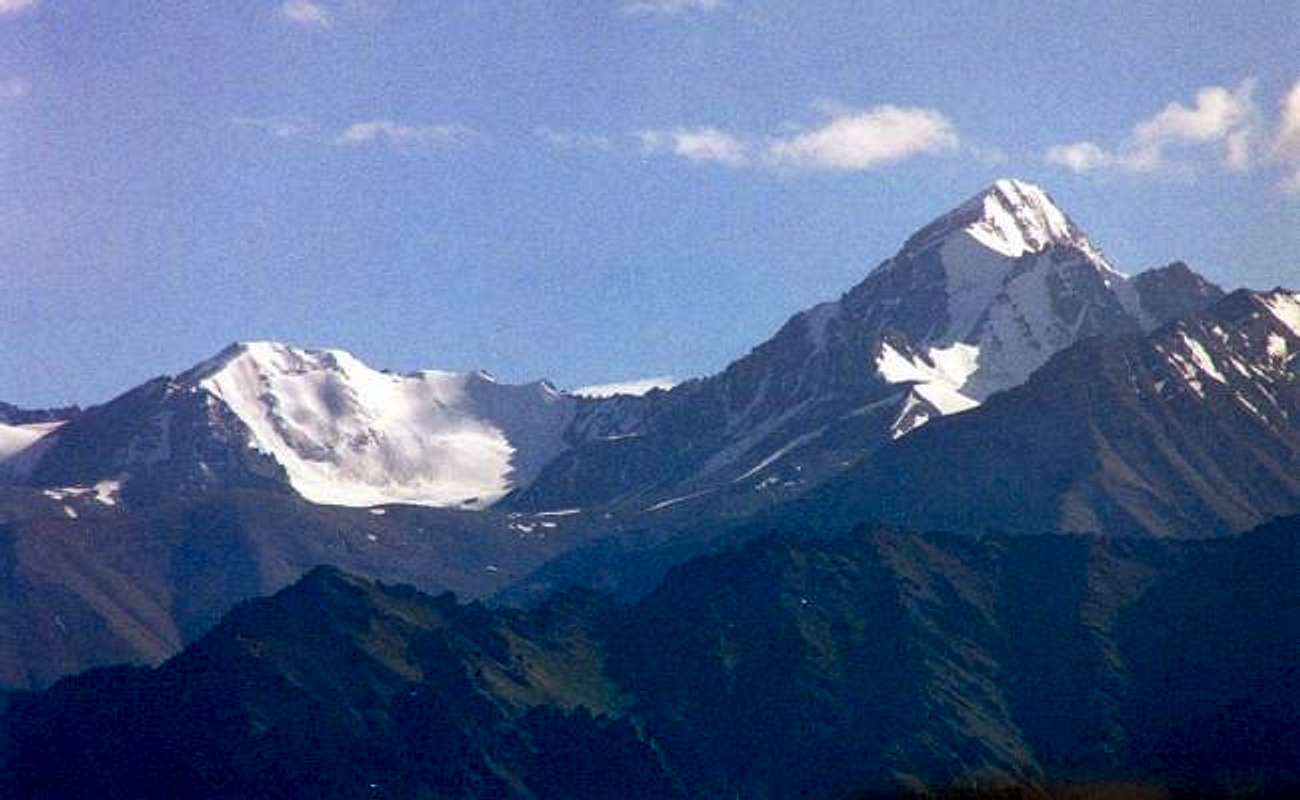
| View of Stok Kangri (from the South West side): Photo Credit: http://www.summitpost.org |
At 8pm on 6 August 2012 our plans to leave for the Stok Kangri climb the following morning suddenly got altered.
We had first arrived in Leh on 26 July 2012. After an initial 3-day acclimatization spell in Leh and after a thoroughly enjoyable, albeit mildly-exhausting, 9-day trek of Markha Valley, all of us in the group had relaxed in Leh for the day on 6 August. Some of us got some washing done. Some of us got additional camera storage organized. Some of us got a full body massage. For some, a hot shower -- after a no shower status in the previous 9 days -- was itself a major luxury. Most of us, though, did not know what day of the week it was; and that is always a good sign of a Blackberry-free break.
By 7pm that evening, we were all really looking forward to a well-planned and well-executed Stok Kangri climb. So we did not take to this news of a late alteration too well.
Our guide rushed in to say that, since the next day was the Dalai Lama's last day in Leh, we would need to leave the hotel earlier than planned. He asked us to prepare to leave the hotel at 6am itself the following day -- as opposed to the 8am we had originally planned. He wanted us to beat the last minute darshan rush and head out to Stok village at the crack of dawn.
We realized that it wasn't really a big issue after all and trudged back to our rooms.
The Dalai Lama had been in town since the day we had first landed in Leh, some 12 days ago. Indeed, on the 27th of August, we even attended a public meeting that he held at a school near the hotel we were staying in.
 |
| The Dalai Lama presiding over a presentation by school kids in Leh |
We returned to our individual rooms, re-packed one last time, reset our alarm clocks to accommodate the new departure time and proceeded to lay head on a firm pillow. We all needed a good nights' rest. After all, we would follow the tent, mattress, sleeping-bag routine for the next four days; much of which would be spent at heights that few of us -- barring our guide -- had been to.
Ours was a totally anal group of nine people. We called ourselves navagraha (after discarding Leh Jayenge, Leh Jayenge), a moniker that was created on day-1 of our trip -- if you wanted evidence that lack of oxygen does have an effect creativity, this is a clear example! Given our anal nature, it wasn't entirely surprising that we were all ready to leave the hotel at 5.45am itself. And this was one of the facets of navagraha that Raju, our tour leader and guide, liked about us. We were always ready well before the agreed and appointed time. He doesn't normally work with Indian groups. But we had been with him on our earlier trek too. And on-time-departure was one of the aspects of our group that made him sign up with us again.
Stok village to Changma
We beat the Dalai Lama darshan rush -- or so we thought -- and reached Stok Village at 7.30am. This is where our expedition started. The first camp was meant to be at Monkyarmo (commonly called Manokarma) camp -- a gain from 3414m to 4305m over a 14km track that included a few steep climbs at an approx. 20% gradient, a few sharp descents and a few interesting river crossings. We made good time through this phase of the trek, again surprising Raju quite a bit.
Up until then, we had reset Raju's expectations (downwards) on our ability to handle pace. Speed wasn't our forte; nor was our ability to handle the desert heat or dust or cold. Indeed, a week after the conclusion of our trip, we are still trying to figure out what our forte exactly is -- apart from being ready on time, that is! But then I lie. We were good with Diamox too.
We were up on the Diamox stakes. Up until then, despite the increasing height, none of us had really taken much Diamox (acetazolamide), which helps fight altitude-related acute mountain sickness (AMS). It works by increasing the alkali (bicarbonate) excreted in the urine, thereby altering the acidity in the blood; this drives the (hyper) ventilation that is required to metabolize more oxygen.
None of us had really felt the need to get onto the Diamox habit. Most trekkers/climbers would proactively pop a Diamox within hours of landing in Leh. We held off until we felt we absolutely needed it. Perhaps this was a pointer to our acclimatization. Perhaps this was a pointer to our levels of fitness. I do not know. But I am counting that as a positive for our group anyway.
The earlier morning start may have contributed to the upbeat mood in our group. The views were stunning as we walked. As we climbed more, we looked back to see where we had climbed from; it was always rewarding to look back and see where you'd come from.

The mountain edges were stark and sharp; it was like a sculptor had chiseled the edges of the mountain in order to form large serrated sections (one such section is in the picture alongside).

We were all feeling really good that day when we reached an interim camp called Changma (I think). Originally this was supposed to be our lunch break. We had a further 4km (and 300m in height) to cross before we reached Manokarma.
But that is where Raju delivered the first bad news of our Stok Kangri expedition.
The Dalai Lama darshan brigade included our horsemen who had refused to go on a trip when their religious leader was in town.
So there we were: nine of us along with Raju and another guide, at an altitude of about 4000m, nearly 7km away from Stok village -- which is where all our bags and 3 other helpers were along with the other stuff that is required for an expedition of this sort: tents, sleeping bags, kitchen equipment, cooking/eating supplies, etc. We hadn't really escaped the Dalai Lama visit.
Anger gave way to frustration gave way to confusion.
But difficult situations bring out the best in tough leaders. These are situations in which Raju, in our view, shines as the Rahul Dravid of the mountains. He is a leader who dissipates panic and oozes calm where calm is needed. He always works with Zen-like clarity. He asked us to spend the rest of the evening at Changma. It was close to noon when he and his co-guide decided to charge back to Stok village. He asked us not to worry and, instead, focus on enjoying Changma for a few hours.
So, we played cards. We heard Paddy, one of our team mates, give us a discourse on the interplay between mind, intellect and body; this was going to be particularly relevant as we prepared ourselves mentally for the Stok Kangri climb. Some of us read. Some of us walked. Some of us took photographs. We killed time.
Meanwhile, Raju had at least four different plans up his sleeve for ensuring that our tents and bags reached Changma. He charged all the way back to Stok village, rang around many horsemen and ensured that one of them would come to our aid. At 8pm, he returned with a new horseman, a reduced set of horses, our tents, our bags, kitchen items and all his helpers. Raju and his wonderful team set up camp at Changma in record time. We had a quick rice-dal meal and were ready to sleep by 9.30pm.
And then it started to rain.
This was quite unusual since this area does not see too much rain at all. But rain, it did; badly. Of course, we were not quite bothered by the rain at Changma. We were immediately worried about the effects that this rain would have at Stok Kangri itself.
Changma to Stok Kangri Base Camp
 The following day, we set off at 6.30am, a bit earlier than usual (again). We crossed Manokarma and climbed on to the Stok Kangri Base Camp. It rained all the way along the 8km trek that took us from a height of 4300m to 4980m. This wasn't good news at all. We didn't mind walking in the rain; indeed, some of us (me included) love walking in the rain. But, as we walked, we were more worried about our Stok Kangri climb and the effects this rain would have on the climb. We reached base camp at noon, tired, wet and grumpy.
After lunch at the Base Camp, we had to make important an decision: Do we attempt the climb to Stok Kangri? Or do we wait another day to see if the weather improves?
We had an additional day up our sleeve and could have used it at Base Camp to see if the weather improved. However, most of us were tired of the Base Camp within a half hour of setting foot in it. We were perhaps keen to conclude the climb and descend to Stok village (and Leh).
 |
| Holding a Stepathlon Pedometer |
In reality, the Stok Kangri Base Camp is nothing more than a brief stop while (mostly) amateur climbers focus on the impending climb of one of the more readily accessible, non-technical 6000m+ mountains in the world.
At Base Camp
Any climb over 6000m is inevitably going to be hard. However, prior to the trip, we read that the Stok Kangri climb was not technically demanding. On good-weather days, it mainly involves (1) going sharply up a very steep rocky scree slope, (2) walking along a ridge to the advanced base camp, (3) crossing a short moraine section, (4) negotiating a fascinating and somewhat challenging permanent glacier, (5) walking up the rocky south face of the Stok Kangri mountain, (6) walking over sharp rocky ridge to reach the snowy summit.
Most sites have divided up the ascent to the Stok Kangri summit from the Base Camp into four or five stages. However, I have divided this into the above six stages for a specific reason, which will become obvious later.
Most of the snow on the mountain melts away by late-July or early-August. So this was a perfect time for us to attempt Stok Kangri. It makes it easy for amateur climbers to attempt the summit; crampons, ice-axes and ropes are not really necessary for late-July, early-August attempts.
That is, if the weather is good, of course.
The continuous rains over the previous two days meant that we were set to attempt a climb of Stok Kangri without crampons and without ice-axes. Perhaps not the best idea, given the context.

Yet, we had reached 4980m by that stage; a non-trivial effort especially as it was the first significant trek/climb for several of our team members. None of us had taken Diamox. And despite (a) the rain, (b) Dalai Lama's visit playing havoc with the availability of our horsemen, (c) the arduous trek to a somewhat strange Base Camp, (d) the cold, and (e) the height, we were all in somewhat good spirits. However, perhaps because of the ordinariness of the Base Camp, most of us wanted to attempt the Stok Kangri climb immediately. None of us wanted to use the additional (bad weather) day to wait a further 36 hours before attempting the summit climb.
So at 4pm that day, our team decided that we would attempt the summit that night itself. Raju declared that we would leave at 1am and asked all of us to get prepared; physically and mentally. We would be woken up at midnight. We would have exactly one hour to get ourselves together before departing for the summit at 1am.
We knew we did not have crampons or ice-axes. Still, we needed to get the rest of our gear together. Each of us decided how many layers of clothing we would each need. I decided on the six layers that I would wear. I wore 4 of those layers that evening itself and slept in these. All I needed was to get up, don the additional two-layered jacket, wear my head gear, my head lamp, my gloves, shoes and gaiters and be off.
Along with Raju, we also decided that we would have Raju, a co-guide and 2 helpers for the nine of us. This was certainly good to hear. This way, if some of us were unable to carry on at any point in time, we could always return without breaking the aspirations of the entire group.
Dinner was at 6pm. And that's when I asked Raju what we would eat/drink before heading out and what we would take with us on the climb by way of eats: "Nothing, apart from tea and a few rusks", was not what I wanted to hear. That was what I heard though. I ought to have said something at that time. However, I was more distracted by learning how to tie the gaiters -- and ensure it stayed tied -- to realize that lack of fuel/food was about join bad weather, our lack of crampons and the absence of ice-axes as another one in the growing list of factors that stood between team navagraha and success.
After dinner, I got into my tent along with my tent partner, NP (the names of all team members have been withheld till they provide me with express permission). We got ourselves organized for the next day. The water bottles were set aside. So also the head lamp, the beanie, the two layers of socks. After much deliberation, I decided to wear my 'skins' too. We then packed our backpacks for the day. Mine had 4.5l of hydration (2.5l water and 2l electrolyte), three zip-locked packets of scroggins/trail-mix (almonds, walnuts, raisins, dried apricots) for the team, sun-lotion, a few first-aid elements and spare batteries for the head lamp -- luckily, for my head lamp gave up on me barely a kilometer into the trek!
We went to bed at 8pm hoping to get 4 hours of shut-eye before our climb. However, adrenalin and altitude have a strange way of playing with one's sleep; I tossed around restlessly, unable to sleep. Each time I'd turn, NP would ask "neend nahin aa raha hai kya?" ("you too can't sleep, huh?"). I even counted from 1 to 6123 -- the elevation of Stok Kangri. Nothing seemed to help.
Perhaps it was the height; 4980m was the highest altitude I had ever slept in up until that point. The previous highest sleeping camp was at Nimaling, which we were at less than a week ago while we undertook the Markha Valley trek (and that is a lovely, picturesque camp at 4700m). Inability to sleep is a common AMS-related symptom. I had faced sleep-difficulty during the Markha Valley trek too. On those occasions, I would listen to either Hindustani music (do not ask me why) or Carnatic violin. I would sleep within 10 minutes of plugging my ears. However, on this night, even that did not help. Although I was tired, and although I tried hard, I believe I was just way too excited to sleep. In the end, NP and I talked about the mind-intellect-body axes. At 11.30pm, we drifted off to sleep, only to be woken up at midnight.
I had had just half hour of sleep prior to attempting the biggest and toughest endurance test of my life; tougher than the marathons I had attempted.
Off we go
I emerged from the tent to an strange quietness. There was a serenity in the camp that seemed surreal. Although there was activity, it was all hush-hush. It was as though we did not wish to alert the mountain to our plans. Many of the tents had headlamps in them. The owners of these headlamps quietly went about their preparation; respectfully, perhaps. It seemed like a quiet diwali. Everyone was preparing in their own simple way for their own special day. I looked at the skies and said a quiet thank you for the good news I perceived: it wasn't raining and I could see stars, which meant clear skies.
After getting myself and my backpack together, I emerged from my tent and asked Raju for a bowl of hot water to brush my teeth. He said, "what is the need?" I am still not sure if he meant 'what is the need to brush your teeth' or 'what is the need for hot water'. I shrugged and decided not to brush my teeth. I grabbed some hot tea, nursed it and focused on the task ahead. I had two pieces of rusk too; and that was all I would have until 6am, while we walked some 5km and gained over 800m in altitude. Big mistake!
We wore our gaiters right away -- it would be too cold at 5400m to muck around with tying our gaiters at that height -- where we really needed it. Our fingers would perhaps be too inflexible from the cold at that height to work the gaiters properly. So we tied our gaiters at Base Camp itself before setting out.
At five minutes to 1am, we are all ready to leave. Six or seven groups had already left by then. We could see their head lamps create a sequence of lights on the mountain track ahead of us. It was like the mountain had some 75 or more lit windows in it. Windows that swayed and moved slowly as the owner of the head lamp trudged up the viciously steep mountain face.
Paddy and Rohan Sridhar got us all together in a circle. Raju gave us a few last minute instructions. PP called for a group hug and Rohan said something that resembled an Aussie Rules Football (AFL) war cry of sorts.
And with that, we were off...
(1) Up the steep rocky scree slope
Our team struck a good pace right away which is a good way to battle the cold weather and the icy wind. Alas! That was too good to last. We soon reverted to our normal (read: slow) pace after a while. But at least we were moving, even if it was slowly. There was much talking, much geeing-up and much support for other team members. As the going got tougher, unfortunately, so did the frequent stops too. And this is exactly what you do not want on a night summit climb. The last thing we wanted was for people to stop; the last thing we wanted was for people standing in the cold, waiting for someone to continue or move.
But we got up to the pass in about 30 minutes; not a bad time at all. We greeted this achievement with much cheering, hand-slapping, back-slapping and hi-fiving.
From the pass, we could see the night lights of Leh; a truly spectacular view. Leh seemed like a distant memory to me. We were at about 5200m at that point (17,000ft). It was almost as though we were looking down on Leh from a helicopter that was preparing to land.
But we got up to the pass in about 30 minutes; not a bad time at all. We greeted this achievement with much cheering, hand-slapping, back-slapping and hi-fiving.
 |
| View of the Base Camp from the Pass (on the way back to Base Camp) |
At that point, my headlamp suddenly decided to give up on me. I had used the headlamp sparingly on the Markha Valley leg and on the previous days of this climb -- mainly to guide me at night from my tent to the toilet tent and back. But cold weather does tend to drain batteries rather quickly. Luckily, the spare batteries came in handy -- I took on my chin the "you anal fellow" banter from the rest of my largely anal group. I changed batteries and we were off again on stage-2 of the climb.
(2) Walking along a ridge to the advanced base camp
This phase is one of the easiest parts of the summit climb. It is a one hour walk which includes a few gradients and a few tricky ridges. I have included this as a specific segment of the trek because this was when two realizations hit us: (a) some of us were quite low on energy/fuel, and more importantly, (b) the rain over the previous 2 days had caused a rather alarming collection of black ice along the track.
In this section, Rohan suddenly complained of a weak tummy and giddiness. I was convinced it was energy related. However, we immediately gave him the one tried and tested mountain formula: Diamox! Indeed, his was the first (and only) Diamox that our group took in the climb. We hoped that in 20 minutes after taking his Diamox, he would be back to his chirpy self. However sadly, despite the presence of his testosterone fueled male ego and the needless bravado that goes with it, Rohan wasn't quite able to regain his chirpiness after that. But, despite his obvious pain and difficulties, he braved the elements and the mountains and soldiered on. Absolutely smashing fellow, this Rohan.
The real danger bell rang, however, when one of us tried crossing a short ridge just prior to the advanced base camp (which is at 5300m). The feet just gave way and within a second, the bottom of this person had an unexpected meeting with the ridge. We were immediately aware of the black ice danger. Awareness of an impending danger plays havoc with the mind.
People write and talk about mental endurance and even research it, but much of the knowledge appears to be work-in-progress still. All of us in our team had all been working on aspects of physical endurance in the months prior to the trek/climb. We were able to sharpen this facet of our preparation during the previous trek of Markha Valley too. Many of us had been working on sharpening our mental endurance too... on a daily basis.
We had all recognized that mental strength meant a call to an inner strength that would enable each of us to deal effectively with all the challenges that the climb (and, by extension, life) posed. After all, this adventure was only partially -- if at all -- about 'peak bagging'. For me, this was, as my friend Paddy said, about identifying 'how far the envelope could be stretched without tearing it'. This was, for me, the toughest 'mind+intellect over body' exercise that I had been a part of. For me, this was finally about willpower, self-discipline, and perseverance enveloped in an air of pragmatic reality. And I was enjoying it thoroughly.
However, while all of us were trying to focus with fierce intent on what we were doing, it was difficult to restrain the mind from getting distracted by the perils of black ice; especially after one of our team members had an unexpected and sudden meeting between his backside and the ridge! It was hard to reign in the mind which sensed dangers and felt fear.
In a mind-intellect game, I found that the best way from then on was to look at a few severely short-term goals; nothing more than 200m at a time. This helped me tremendously. I was no longer looking at the summit as my goal. I was looking at crossing the next 200m. I had to will myself to believe in a much-abhorred cricketing cliche: I focused on the next ball that is about to be bowled, and nothing more (one ball at a time please).
And I told myself that I would not quit. I heard young Rohan say "I am not a quitter; I am not quitting" a few times too! The mind perceived pain and danger. The body was always willing to quit. The rational intellect knew that I had faced similar situations before. This, along with people around me kept me going.
Small steps towards small/achievable goals.
(3) Crossing a short moraine section
A moraine is a mass of rocks, boulder, stones and other assorted debris deposited by a glacier at its edge. We walked on the moraine that runs parallel to the Stok Kangri (permanent) glacier for about a kilometer or so. This is normally a somewhat easy segment of the climb. This was yet another difficult section for us on the day; once again, due to black ice that had formed in between the loose rocks/boulder. Progress was slow. We could not just place a foot forward and hope that the core muscles will take care of stability and balance. We had to constantly ensure that there was no black ice accumulation that would take our legs away. It wasn't as though this segment was hard; weather conditions over the previous few days meant that progress had to be measured.
We weren't the fastest group on the climb. We weren't the slowest either. As we negotiated the moraine section, I could see clumps of headlamps representing climbers ahead of us. The headlamps created eerie patterns in the night sky. I could see the white of the glacier. But beyond that, it was all quite dark; except for the distant headlamps that swayed like kerosene fueled lanterns on a windy night in an Indian village.
Some of the climbers were already on the glacier. Some were already on the face of Stok Kangri. I thought I saw two climbers on the upper ridge too. "Fit fellows, them buggers" I thought to myself.
But then, I curbed myself from thinking too far ahead. I had to focus on the next ball: Watch the hand, watch the release, play the ball on its merit.
It was just before this segment that we lost the first two members of our team. MR and BR decided to leave us at this point. MR had "just had enough". Both MR and BR were fit. They had shown no signs of deterioration or fatigue. So it did surprise me that they turned back. But then, that's what mountain climbs do. Suddenly MR had "just had enough". One of the helpers went back to Base Camp with MR and BR.
From 9 members of the team, 2 guides and 2 helpers, we were down to 7 members (sapta swaras, perhaps?) 2 guides and 1 helper.
(4) Negotiating the permanent glacier
I have negotiated a temperate glacier before (Franz Josef in New Zealand). I believe other members of our (now) seven-member team had negotiated glaciers in the past. This one was different. It was a bit loose and could be negotiated without crampons. The looseness, however, made it that much more difficult on the legs.
 |
| The Stok Kangri Gllacier (photo taken on the way back to Base Camp) |
But, as we crossed the glacier and hit another short moraine section (this time on the mountain side of the glacier), the mood in the group lifted immensely; we sensed the first break of dawn. Suddenly we could see the Stok Kangri peak clearly. We saw the challenge that was ahead of us. Darkness lifted and our spirits immediately lifted with it; only to be dowsed immediately when we noticed that there were indeed 2 climbers on the ridge who were barely half hour away from the summit.
But that was a needless distraction.
Short goals: Focus on the next ball.
We crossed the glacier and sat down at the moraine on the mountain edge of the glacier. We took our first really long break. Up until then, the need to keep moving meant that we did mostly that: kept moving, slowly. Now, with dawn breaking, we feared the cold less and focused more on our flagging energies.
It was 5.30am now and we were at approximately 5500m. I switched off my headlamp at this stage and looked for things to eat. I was certainly low on energy and I sensed Rohan and DS were on reserve fuel too. There wasn't much apart from the scroggins I had packed and a few chocolate bars. Raju unearthed a packet of extremely salty churmure from his backpack. I thought to myself, 'Really? Churmure at 5.30am?' But the salt fix was exactly the performance enhancing boost we all needed. We were all drained of energy by then. It wasn't a great feeling. Rohan was drained and so was DS. It appeared as though NP was on his last legs too.
And then came the body blow. Paddy and Padma announced that they had had enough! This came as a major surprise to all of us. I looked up to Padma and Paddy as two of the (physically and mentally) stronger people in the group. In a shock announcement, they declared that they were heading back.
So, from an initial 9-member team, with 2 guides and 2 helpers, we were down to 5 members (pancha pandavas, perhaps?) and 2 guides. We could ill-afford any further team losses.
(5) Walking up the 'rocky' south face of the Stok Kangri

However, we pressed on. We had no choice. Watch the hand. Watch the next ball...
We had to walk up this snow-filled face up to a point (approximately 5850m) take a sharp turn (left) towards the ridge and then climb the ridge of Stok Kangri to the summit. That was the plan.
However, given we did not have crampons and considering the thick snow fall over the previous few days, we could not walk straight up the snow face. We had to slowly and painfully zig-zag our way up this slope. The fresh snow also meant that one had to dig/kick into the snow to get a grip with one leg before moving the next one forward. It was hard work.
Within 20 minutes of walking on the moraine just prior to the start of this snow-filled section/face of the climb, we 'lost' our next member. NP decided he had enough and decided to turn back. He went with one of the guides. And so, we only had Raju (our main guide) left for the four remaining members: Rohan, DS, GN and myself.
We continued on; slowly and painfully. Each step was a project: Hack laterally into the side of the mountain. Get a grip. Extract the trailing leg. Move it forward. Ensure proper grip. Take the leg with the firm grip out of the snow. Breathe. Hack laterally into the side of the mountain. Rinse. Repeat.
But we sang. We played word games. We did not look at the summit. Each of us had our own mind-over-body games that we played. Raju kept insisting that this would be a successful group. "I will not allow you to fail," he kept repeating. This was still all too easy for him. He had done this may times over; he was supremely fit. He encouraged us and goaded us not to give up; he assured us we could do it.
Meanwhile, I was just focused on the next ball.
I was feeling good. I felt in control. I set myself short/small goals: two zig-zag paths and then a water swig, three zig-zag paths and then a chocolate-bite, four zig-zag paths and then an electrolyte swig, five zig-zag paths and hyperventilate. That was my simple pattern and simplistic existence; it was working for me. I wasn't thinking about the summit. I wasn't thinking about flags. I wasn't getting too far ahead of myself. And I knew that that was the best way to deal with it.
My heart-rate was perfectly under control too; at least my Garmin thought it was! Moreover, although my breathing was a bit laboured and although I stopped every now and then to hyperventilate, I felt somewhat in control of myself. I had no headache or shortness of breath. I was hydrating well and felt under control. I did, however, feel a bit weak from lack of food. But then I had been in that space before on my first marathon run and knew I could draw on that experience somewhat to overcome this.
Every now and then, I would look across at Rohan, DS and GN to egg them on. GN did not need much support. He seemed perfectly fit and completely in control of his situation. Rohan and DS needed words of encouragement every now and then. Both GN and I would offer encouragement to them. We had to look after each other.
We ensured that we got to the point where we had to turn left to head towards the ridge. We had done the hard work. I thought we looked strong enough to do it. We had reached a height of approximately 5850m.
I looked up at the summit and, perhaps for the first time in the entire climb, thought to myself: "Ah! Won't it be exhilerating to get there after all of this?" I even pictured myself in a summit photo momentarily.
Ironic.
Within seconds of that thought DS sat down with a thud and declared: "That's it. I am exhausted. I have had enough".
The mountain has a way of dealing with people who get too far ahead of themselves. The mountain demands a sharp focus on the here-and-now. It does not tolerate dreamers. I had allowed myself to dream about the century when I ought to have focused on the next ball.
All of us encouraged DS to hang in there. Meanwhile, my mind was working overtime. As the oldest member remaining in the group, I felt a sense of responsibility towards young DS. We had one guide and if DS wanted to head back, I was convinced of my responsibility lines.
DS did hang in there. For another 5 minutes; perhaps a zig and a zag. And then, for the second time, she sat down with a thud and said, "Not a step more. I am finished."
And she looked finished too.
This caused a team debate on what ought to happen. At that point, Raju made the call that young Rohan was too unsteady and wasn't quite fit enough to mount a summit challenge either. Rohan protested, but that fell on deaf ears. He had no choice but to join DS in returning to Base Camp.
My mind was made. I decided to return to Base Camp with Rohan and DS. One was exhausted and the other was declared as "too unsteady". They couldn't head back on their own. I had a clear sense of right about it. I was completely cogent, fluent and clear about my thought process. I knew exactly what I had to do and had no regrets about the call from the moment I made it: Clarity at 5850m!
Would I have made the summit? I don't know and at one level, I do not care either. Raju felt I would have made it all the way. But then, at the glacier, he thought DS would have made the summit too. So, one can never really say what might happen on a mountain. All I know is that, at that point in time, there was a Bellman's principle that operated: the decision I took (for me and for the team) was the best decision I could have made given what had happened in the past few hours.
The time was 8.15am. Some 7 hours after we had started from Base Camp, Rohan, DS and I turned back. We reached Base Camp at 10.30am. The way down is clearly faster.
(6) Walking over sharp rocky ridge to reach the snowy summit
So GN and Raju continued on to the summit. It wasn't as though it was easy. But at about 10.45am, some 2 and a half hours after we had bid goodbye to them, and some 10 hours after they commenced the climb, GN made it to the Stok Kangri summit along with a lot of help from Raju, our guide.
 |
| GN (left) and Raju (from Grand Adventures) at the Stok Kangri summit. |
I hope GN will blog separately about his own experiences from 5850m to the summit. But I am glad he made it; the whole team was glad that one of us made it to the top. It would have been great if more people had made it to the top. But that is what mountain climbing is all about. We set out on what was a somewhat 'easy' and 'accessible' climb; made much more harder by the elements. Some of us might have a second crack at it. But then, all of us have learned a lot from the experience; about ourselves, about the elements, about respect, about the limits of our own abilities and much much more.
-- Mohan
[Credits:] Lots of people to thank, but in the main I would like to thank the navagraha team and Raju. I'd also like to thank the people who took the lovely photos I included in the post. I did not take a single photo. I am not a camera sort of a person. So, I sincerely appreciate the pics that others took.
PS-1: The following day, we left Base Camp and walked straight back to Stok Village (and Leh). We set off at 7am and reached Leh by 3pm.
PS-2: This is not an advertisement for Raju and Grand Adventures. None of us in our team have any commercial relationships with either Raju or Grand Adventures. We just find them extremely professional to deal with and would recommend them highly to you.
PS-3: Other members of our team might have slightly different accounts of the climb. This is just my account of the climb. I will link other reports to this section as they appear.
PS-4: The Garmin 405 that I had struggled most days to get things right in terms of speed/distance. But it seemed to get elevation data mostly right. Here is a link to data on the first days' trek from Stok to Changma.


